

I know that choosing the best camera lens for landscape photography can feel overwhelming. There are many options, and each one offers different strengths. However, the right lens can completely change how you capture nature, light, and detail in your images.
In this guide, I will walk you through the key features that matter most in landscape lenses. In addition, I will highlight top picks, explain a simple buying guide, and answer common questions. As a result, you will have a clear understanding of what to choose and why it matters for your photography.
Best Camera Lens for Landscape
1) Canon RF 14–35mm f/4L IS USM

Get it on Amazon
The Canon RF 14–35mm f/4L IS USM is designed for photographers who want ultra wide-angle flexibility without carrying heavy gear. It delivers strong performance for landscapes, architecture, and travel photography. With its wide 14mm reach, it opens up dramatic scenes that feel expansive and immersive. At the same time, it remains compact and easy to carry, which makes it practical for long outdoor shoots.
This lens covers a useful zoom range from 14mm to 35mm. That range allows you to move from very wide scenic shots to tighter environmental compositions without switching lenses. The constant f/4 aperture keeps exposure consistent while zooming, which is helpful when shooting changing light conditions outdoors. In addition, Canon’s L series optical design ensures high image clarity with strong color accuracy and contrast across the frame.
Image quality is further improved through advanced coatings such as SWC and ASC. These coatings help reduce flare and ghosting when shooting into bright light like sunrise or sunset. As a result, the lens performs well in high contrast landscape situations. The built in stabilization system also supports up to 5.5 stops of shake correction, and even more when paired with compatible Canon camera bodies with in body stabilization. This helps produce sharp handheld images in low light or windy outdoor conditions.
Another strong point is its close focusing ability. The lens can focus as close as 7.9 inches at all focal lengths. This allows creative foreground detail in landscape scenes such as flowers, rocks, or textures. At 35mm, it also achieves a maximum magnification of 0.38x, which adds versatility beyond traditional wide angle use. Despite its performance, the lens remains lightweight at about 1.2 lbs, making it ideal for hiking and travel photography.
Specifications
- Focal length: 14–35mm
- Maximum aperture: f/4 constant
- Lens type: L series ultra wide zoom
- Minimum focusing distance: 7.9 inches (0.2m)
- Maximum magnification: 0.38x at 35mm
- Image stabilization: up to 5.5 stops (more with compatible bodies)
- Lens coatings: SWC and ASC
- Weight: approximately 1.2 lbs
- Mount: Canon RF
Pros
- Very wide 14mm focal length for dramatic landscapes
- Sharp image quality across the zoom range
- Constant f/4 aperture for consistent exposure
- Lightweight and travel friendly design
- Strong image stabilization performance
- Good close focusing for creative foreground shots
- Reduced flare and ghosting in bright light
Cons
- f/4 aperture is less ideal for very low light compared to f/2.8 lenses
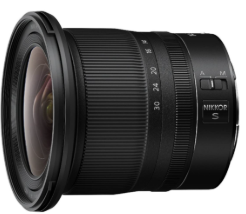
2) Nikon Z 14–30mm f/4 S
Get it on Amazon
The Nikon Z 14–30mm f/4 S is built for photographers who want wide, immersive landscapes in a compact form. It works especially well with Nikon Z series cameras, where it delivers strong clarity and natural depth in both stills and video. With its ultra wide 14mm reach, it captures expansive scenes such as mountains, coastlines, and city skylines with ease. At the same time, it stays light and travel friendly, which makes it ideal for outdoor photography.
This lens covers a flexible zoom range from 14mm to 30mm. That range gives you both extreme wide angle views and slightly tighter compositions for storytelling. The fixed f/4 aperture keeps exposure consistent while zooming, which helps when shooting changing light conditions in the field. In addition, Nikon’s optical design ensures sharp detail across the entire frame, so edges and corners remain clear in landscape shots.
Another strong advantage is its compact retractable design. The lens collapses down to about 3.5 inches, which makes packing and carrying much easier during travel or hikes. Despite its small size, it maintains professional level image quality. This balance between portability and performance makes it a reliable choice for photographers who move often between locations.
Autofocus performance is also smooth and quiet thanks to Nikon’s Stepping Motor technology. This makes it useful not only for photography but also for video work. Focus transitions feel natural, and the lens responds quickly to changing scenes. In addition, the Z mount system improves optical performance, allowing more light and detail to reach the sensor for cleaner and more accurate images.
Specifications
- Focal length: 14–30mm
- Maximum aperture: f/4 constant
- Lens type: Ultra wide zoom for Nikon Z mount
- Minimum size when retracted: approximately 3.5 inches
- Autofocus system: Stepping Motor (STM)
- Lens design: Full frame compatible NIKKOR Z series
- Mount: Nikon Z
- Use case: Landscape, travel, architecture, video
Pros
- Very wide 14mm focal length for dramatic landscapes
- Compact retractable design for easy travel
- Sharp image quality across the entire frame
- Constant f/4 aperture for consistent exposure
- Fast, smooth and quiet autofocus system
- Lightweight and easy to carry for outdoor use
- Good performance for both photo and video
Cons
- f/4 aperture limits low light flexibility compared to f/2.8 lenses
3) Sony FE 16–35mm f/4 G

Get it on Amazon
The Sony FE 16–35mm f/4 G is designed for creators who want a lightweight wide angle zoom with strong optical performance. It covers a useful focal range for landscapes, travel, and architecture. With its 16mm wide end, it captures expansive scenes such as mountains, coastlines, and city views with strong depth. At the same time, it remains compact, which makes it easy to carry during long outdoor shoots.
When choosing the best camera lens for landscape this lens delivers consistent image quality across the zoom range. The G lens optical design produces sharp details and natural rendering, which is important for landscape photography where clarity matters across the entire frame. The constant f/4 aperture keeps exposure stable when zooming, so you can adjust composition without worrying about sudden brightness changes. As a result, it works well in changing outdoor lighting conditions.
A major strength of this lens is its advanced power zoom system. It uses four XD Linear Motors to deliver smooth and controlled zooming. This allows precise adjustments whether you are shooting stills or video. In addition, zoom response feels immediate and accurate, which helps when framing wide landscape scenes. The lens also supports slow and controlled zoom speeds, which is useful for cinematic landscape video work.
Another important advantage is its design for video stability and control. The lens reduces focus breathing and maintains a steady angle of view during focusing and zooming. This helps produce stable footage when capturing moving scenes like waves, clouds, or shifting light. The focus, zoom, and aperture rings are all independent, which gives more control during shooting. Each ring responds smoothly, making manual adjustments feel natural.
Despite its advanced features, the lens remains lightweight and travel friendly. It is suitable for solo photographers and small production setups. It also performs quietly, which reduces unwanted noise during video recording. This makes it practical for both outdoor filmmaking and still landscape photography.
Specifications
- Focal length: 16–35mm
- Maximum aperture: f/4 constant
- Lens type: Sony G series wide angle zoom
- Motor system: XD Linear Motor power zoom
- Control: Independent zoom, focus, and aperture rings
- Autofocus: Fast and quiet system optimized for stills and video
- Mount: Sony E mount full frame
- Use case: Landscape, travel, architecture, video production
- Design: Lightweight compact wide angle zoom
Pros
- Lightweight design for easy travel and outdoor use
- Wide 16mm focal length for expansive landscape shots
- Sharp and consistent image quality across the frame
- Smooth and precise power zoom system
- Quiet operation suitable for video recording
- Strong control with independent rings for zoom, focus, and aperture
- Good performance for both photography and filmmaking
Cons
- f/4 aperture is less ideal for low light compared to f/2.8 lenses
4) Fujifilm XF 10–24mm f/4 R OIS WR

Get it on Amazon
The Fujifilm XF 10–24mm f/4 R OIS WR is designed for photographers who want wide angle flexibility in a compact and durable form. It is well suited for landscape photography, especially when capturing mountains, forests, and open skies. With a 35mm equivalent range of 15–36mm, it covers many popular wide focal lengths in one lens. This makes it practical for travel and outdoor shooting where changing lenses is not ideal.
This lens maintains a constant f/4 aperture across the zoom range. As a result, exposure stays consistent while zooming, which helps when working in changing light conditions outdoors. The optical design delivers edge to edge sharpness, so details remain clear from the center to the corners of the frame. This is especially useful for landscape scenes where every part of the image matters.
Another important strength is its improved stabilization system. Optical Image Stabilization provides up to 3.5 stops of correction on its own. When paired with compatible Fujifilm cameras that have in body stabilization, it can reach up to 6.5 stops. This helps reduce camera shake when shooting handheld, especially in low light or windy environments. Therefore, you can capture sharper images without always relying on a tripod.
Durability is also a key focus of this lens. It has weather resistant sealing that protects against dust and moisture. In addition, it performs reliably in cold conditions down to minus 10 degrees Celsius. This makes it suitable for outdoor photographers who work in unpredictable environments. At the same time, it remains lightweight and portable, which improves comfort during long shooting sessions.
Autofocus performance is fast, accurate, and quiet. The focusing system is designed to keep subjects sharp whether they are still or moving. It also minimizes focus breathing, which is helpful for both photography and video work. As a result, the lens feels responsive and dependable in real shooting situations. This features makes it one the best camera lens for landscape.
Specifications
- Focal length: 10–24mm (35mm equivalent 15–36mm)
- Maximum aperture: f/4 constant
- Lens type: Fujifilm XF wide angle zoom
- Stabilization: Optical Image Stabilization up to 3.5 stops
- Extended stabilization: up to 6.5 stops with compatible IBIS bodies
- Weather resistance: dust and moisture resistant design
- Operating temperature: down to minus 10 degrees Celsius
Pros
- Wide focal range ideal for landscape photography
- Sharp edge to edge image quality
- Effective image stabilization system
- Weather resistant build for outdoor use
- Lightweight and easy to carry
- Quiet and fast autofocus performance
- Constant f/4 aperture for consistent exposure
Cons
- f/4 aperture limits low light performance compared to faster lenses
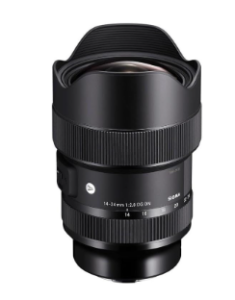
5) Sigma 14–24mm f/2.8 DG DN Art
Get it on Amazon
The Sigma 14–24mm f/2.8 DG DN Art is a good choice to consider for the best camera lens for landscape since its built for photographers who want extreme wide angle performance with professional image quality. It is especially strong for landscape photography, where capturing vast scenes with depth and detail matters. With its 14mm ultra wide reach, it allows dramatic compositions of mountains, coastlines, and night skies. At the same time, it maintains strong sharpness across the frame, which is important for high resolution landscape work.
This lens uses a constant f/2.8 aperture, which allows more light to reach the sensor compared to many standard wide zoom lenses. As a result, it performs well in low light situations such as sunrise, sunset, and astrophotography. In addition, the optical design delivers high clarity and controlled distortion, helping landscapes look natural and detailed. The wide aperture also gives more flexibility when shooting in challenging lighting conditions outdoors.
Autofocus performance is fast and accurate thanks to the Hyper Sonic Motor system. It locks onto subjects quickly and maintains focus reliably, even when scenes change. This makes it useful not only for still landscapes but also for moving elements such as clouds, waves, or wildlife in the distance. The focusing system supports smooth operation, which adds to its usability in real world shooting.
Durability is another strong advantage of this lens. It features dust and splash resistant construction with sealing around key points such as the mount and control rings. This helps protect the lens when shooting in outdoor environments like beaches, forests, or dusty trails. Therefore, photographers can use it with confidence in changing weather conditions.
Although it is a professional grade lens, it is designed to support modern creative workflows. It even offers a conversion option for specialized VR and multi camera video setups. This shows its flexibility beyond traditional photography, making it suitable for advanced visual production work.
Specifications
- Focal length: 14–24mm
- Maximum aperture: f/2.8 constant
- Lens type: Sigma Art ultra wide zoom
- Autofocus system: Hyper Sonic Motor
- Mount: Available for mirrorless systems including Leica L mount
- Build: Dust and splash resistant construction
- Use case: Landscape, astrophotography, architecture, VR video
- Special feature: Optional conversion for round hood VR applications
Pros
- Extremely wide 14mm focal length for dramatic landscapes
- Bright f/2.8 aperture for low light and night photography
- Very sharp image quality across the frame
- Fast and accurate autofocus system
- Strong build quality with weather resistance
- Good control of distortion for wide angle work
- Versatile for both photography and advanced video setups
Cons
- Heavy compared to smaller f/4 wide angle zoom lenses
Read also: 6 Best Camera Lens for Real Estate Photography
Factors to Consider when Choosing the best camera lens for landscape
Here are 8 well explained factors to consider when choosing the best camera lens for landscape;
1. Focal length range
Focal length is one of the most important choices for landscape photography. Wide angles help capture large scenes such as mountains, skies, and coastlines in a single frame. In addition, shorter focal lengths create a sense of depth and scale. However, slightly longer focal lengths can help isolate parts of a scene for more focused compositions. Therefore, in the best camera lens for landscape, a flexible zoom range is often more useful than a fixed view.
2. Sharpness across the frame
Sharpness matters not only in the center but also at the edges. Landscape images often include fine details across the entire scene, so corner clarity is important. In addition, strong edge to edge sharpness ensures that textures like rocks, trees, and clouds remain clear. As a result, images look more professional and balanced when viewed or printed.
3. Aperture performance
A wide aperture allows more light to enter the lens, which is useful in low light conditions such as sunrise or sunset. However, landscape photography often uses mid range apertures for maximum detail. Therefore, a constant aperture design is helpful because it keeps exposure stable while zooming. In addition, brighter apertures offer more flexibility for night sky photography.
4. Image stabilization
Image stabilization helps reduce blur caused by hand movement. This is especially useful when shooting without a tripod or in windy outdoor conditions. In addition, stabilization allows slower shutter speeds while still maintaining sharp results. As a result, it becomes easier to shoot in low light environments or during travel.
5. Build quality and weather resistance
Outdoor photography often involves changing weather and rough environments. Because of this, weather sealing becomes very important. It helps protect the lens from dust, moisture, and light rain. In addition, strong construction ensures reliability when shooting in remote locations. Therefore, when it comes to choosing the best caera lens for landscape, a durable lens provides more confidence in the field.
6. Weight and portability
Landscape photographers often walk long distances to reach shooting locations. For this reason, lightweight lenses are easier to carry and use. In addition, compact designs reduce fatigue during long sessions. However, portability should still balance with image quality. As a result, the best lenses offer both performance and ease of transport.
7. Autofocus speed and accuracy
Fast and accurate autofocus helps capture sharp images quickly. This is useful when lighting conditions change or when subjects move within the scene, such as clouds or wildlife. In addition, quiet focusing is helpful for video recording. Therefore, reliable autofocus improves both flexibility and shooting efficiency.
8. Optical quality and distortion control
Good optical design ensures natural looking images with minimal distortion. This is especially important in wide angle photography where straight lines can bend easily. In addition, strong lens coatings help reduce flare and ghosting when shooting toward the sun. As a result, images remain clean, contrast rich, and visually accurate.
best camera lens for landscape FAQs
What is the best focal length for landscape photography?
Wide focal lengths work best for landscapes. Generally, ranges between 14mm and 35mm capture large scenes with strong depth. In addition, wider lenses help include more of the environment in one frame. However, slightly longer zoom settings can also help isolate details within a scene.
Do I need image stabilization for landscape lenses?
Image stabilization is very helpful, especially when shooting handheld. It reduces blur caused by camera shake in low light or windy conditions. In addition, it allows slower shutter speeds without losing sharpness. However, if you always use a tripod, stabilization becomes less critical.
Is a fast aperture important for landscape photography?
A fast aperture is useful but not always necessary. Wide apertures like f/2.8 help in low light and night scenes. However, many landscape photos are taken between f/8 and f/11 for maximum sharpness. Therefore, constant aperture lenses offer flexibility rather than just brightness.
Should I choose a zoom lens or a prime lens for landscapes?
Zoom lenses are often more practical for landscapes. They give flexibility to change composition without moving too much. In addition, they are useful when shooting in different environments quickly. However, prime lenses can offer slightly better sharpness and lighter weight in some cases.
Conclusion
The best camera lens for landscape photography stand out because they combine wide angle coverage, sharp image quality, and reliable performance in outdoor conditions. In addition, they offer strong optical design that keeps details clear from edge to edge, which is important for capturing natural scenery.
Most also include features like image stabilization, weather resistance, and fast autofocus, which improve usability in real world environments. As a result, they handle changing light, movement, and terrain with ease. Overall, these lenses are the best choice because they balance portability, durability, and creative flexibility, helping photographers capture landscapes with clarity, depth, and impact.