

I will guide you through the Best Mirrorless Cameras for Video and help you choose the right one with confidence. First, I will explain the key features that matter most, such as video quality, autofocus, and stabilization.
Then, I will share the top picks based on different needs and budgets. In addition, I will include a simple buying guide to make your decision easier. Finally, I will answer common questions so you can avoid confusion. As a result, you will have a clear and practical understanding before making your choice.
Best Mirrorless Cameras for Video
1) Sony A7 V

Get it on Amazon
The Sony Alpha 7 V mirrorless camera stands out as one of the best mirrorless cameras for video in 2026. It blends speed, intelligent autofocus, and strong video quality in a compact body. As a result, it suits content creators, filmmakers, and hybrid shooters who want reliability without complexity.
First, the camera uses a 33.0 MP partially stacked Exmor RS CMOS sensor. This design improves readout speed significantly. In fact, it is about 4.5 times faster than the previous generation. Because of this, rolling shutter is reduced and motion looks more natural. It also supports blackout free bursts up to 30 fps with continuous autofocus and exposure tracking. For video, it records up to 4K at 120 frames per second. Therefore, it is ideal for slow motion and high quality footage.
In addition, the new BIONZ XR2 processor improves both image and sound quality. It also enhances responsiveness and workflow. AI based subject recognition becomes more accurate and stable. The camera can track human eyes, body position, and multiple subjects with ease. As a result, focusing stays reliable even in complex scenes. Color reproduction is also more consistent, which helps during editing.
Moreover, the camera delivers up to 16 stops of dynamic range. This allows smooth transitions from shadows to highlights. Footage looks more natural, especially in high contrast scenes. Noise reduction is also effective across a wide ISO range. It performs well from ISO 100 to 51200, with extended ranges available for both stills and video. Consequently, low light shooting remains usable and detailed.
Stabilization is another strong area. The camera includes an advanced optical stabilization unit with gyro sensors. It provides up to 7.5 stop compensation at the center and 6.5 at the edges. Because of this, handheld shooting becomes more stable without increasing ISO. Even at longer focal lengths, shake is well controlled. When paired with compatible lenses, stabilization improves further.
Finally, the overall experience feels refined. The interface is smoother and file management is easier. Networking and connectivity options are also improved. Therefore, the camera fits well into modern content workflows.
Specifications
- Sensor: 33.0 MP full frame partially stacked Exmor RS CMOS
- Processor: BIONZ XR2
- Video: 4K up to 120p
- Dynamic range: Up to 16 stops
- ISO range: 100 to 51200 (expandable for stills and video)
- Burst shooting: Up to 30 fps blackout free
- Shutter speed: Up to 1 by 16000 s
- Stabilization: Up to 7.5 stop compensation
- Autofocus: AI based real time recognition and tracking
Pros
- Fast sensor readout reduces rolling shutter
- Reliable autofocus with AI subject tracking
- High quality 4K 120p video
- Strong dynamic range for HDR work
- Excellent in body stabilization
- Good low light performance
- Smooth and improved user interface
Cons
- No 8K video support
2) Canon EOS R5 Mark II
Get it on Amazon
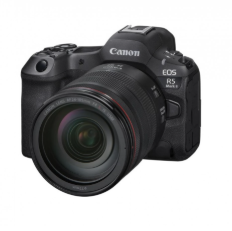
The Canon EOS R5 Mark II mirrorless camera is a powerful option for creators who need high resolution video and advanced autofocus. It builds on the reputation of the R5 line while improving speed, tracking, and workflow. As a result, it fits well in professional video production and high end content creation.
First, the camera features a newly designed 45 MP full frame back illuminated stacked CMOS sensor. This design improves readout speed and reduces distortion during motion. Because of this, video footage appears smoother and more natural. It also supports up to 30 fps using the electronic shutter. Therefore, it performs well in both fast action and hybrid shooting.
In addition, the autofocus system is more advanced. Eye control focus allows the camera to follow where you look in the viewfinder. This makes subject selection faster and more intuitive. Furthermore, the system can maintain focus even when the subject is briefly blocked. As a result, tracking remains stable in crowded or dynamic scenes.
Another advantage is the ability to capture video and stills at the same time. This improves efficiency during shoots. For example, you can record footage while capturing high quality images without interruption. Consequently, it is useful for events, documentaries, and fast paced production environments.
Moreover, Action Priority adds intelligence to subject tracking. The camera analyzes scene data and predicts the main subject in motion. It then locks focus on that subject. Because of this, it performs well in sports and wildlife situations where movement is unpredictable.
Overall, the camera delivers strong video performance with advanced tracking and high resolution output. It suits professionals who need flexibility and speed in demanding conditions.
Specifications
- Sensor: 45 MP full frame back illuminated stacked CMOS
- Continuous shooting: Up to 30 fps electronic shutter
- Video: High resolution video including 8K and oversampled 4K
- Autofocus: Eye control focus with advanced subject tracking
- Simultaneous capture: Video and stills at the same time
- Scene detection: Action Priority subject recognition
Pros
- High resolution sensor for detailed video and stills
- Fast readout reduces distortion
- Advanced autofocus with eye control
- Reliable subject tracking even with obstructions
- Ability to shoot video and photos together
- Strong performance in action scenarios
Cons
- Expensive for many users
3) Panasonic Lumix S5 II / S5 IIX
Get it on Amazon
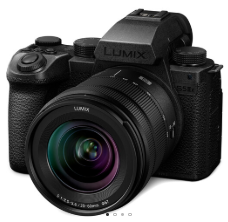
The Panasonic Lumix S5IIX mirrorless camera is built for creators who prioritize video quality and workflow flexibility. It combines strong internal recording options with reliable autofocus and stabilization. As a result, it stands out as one of the best mirrorless cameras for video, especially for filmmakers and advanced content creators.
First, the camera features a 24.2 MP full frame CMOS sensor with phase hybrid autofocus. This improves focusing speed and accuracy compared to earlier models. Because of this, subject tracking feels more consistent in both video and photography. It performs well even during movement, which makes it suitable for handheld shooting and dynamic scenes.
In addition, the imaging engine delivers higher speed signal processing. This allows high bit rate video recording without compromising detail. The camera supports 5.8K ProRes and internal ProRes recording. It also offers RAW output over HDMI. Therefore, it fits easily into professional editing workflows and high quality productions.
Moreover, the camera captures up to 14 plus stops of dynamic range using V Log and V Gamut. This provides rich color depth and smooth tonal transitions. Footage retains detail in both shadows and highlights. As a result, it is ideal for color grading and cinematic projects.
Stabilization is another key strength. Active I S helps reduce shake during walking shots. This improves handheld footage without the need for extra gear. In addition, the camera includes an advanced heat management system. This allows unlimited video recording and livestreaming without overheating. Consequently, it is reliable for long shoots and live production.
Finally, connectivity options are impressive. The camera supports both wireless and wired IP streaming. This makes it useful for creators who stream or broadcast content regularly. Overall, it delivers a balanced mix of performance, reliability, and professional features.
Specifications
- Sensor: 24.2 MP full frame CMOS with phase detection autofocus
- Video: 5.8K recording with internal ProRes support
- Dynamic range: 14 plus stops with V Log and V Gamut
- Stabilization: Active I S for handheld shooting
- Output: RAW video over HDMI
- Recording: Unlimited video with advanced heat management
- Streaming: Wireless and wired IP streaming support
Pros
- Strong video codecs including internal ProRes
- Reliable autofocus with phase detection
- High dynamic range for flexible grading
- Unlimited recording time
- Effective stabilization for handheld use
- Supports professional workflows with RAW output
- Built for streaming and live production
Cons
- Autofocus still not class leading compared to some rivals
4) Nikon Z6 III
Get it on Amazon
What is the best video resolution for most creators?
First, 4K is enough for most content. It offers sharp detail and manageable file sizes. However, 6K or 8K gives more flexibility in editing. Therefore, choose higher resolution if you plan heavy cropping or professional work.
Do I need strong autofocus for video?
Yes, reliable autofocus is very important. It keeps your subject sharp without constant adjustment. In addition, tracking features help in movement. As a result, your footage looks more professional and consistent.
How important is stabilization?
Stabilization is essential, especially for handheld shooting. It reduces shake and improves smoothness. Moreover, it helps in run and gun situations. Therefore, it can reduce the need for extra gear like gimbals.
What should I consider for long recording sessions?
First, check recording limits and heat control. Some cameras stop after a short time. However, others support longer or unlimited recording. In addition, battery life also matters. As a result, this is important for interviews, events, and streaming.
Conclusion
In conclusion, the Best Mirrorless Cameras for Video combine strong image quality, reliable autofocus, and flexible recording options. They offer high resolution video, smooth frame rates, and wide dynamic range. In addition, they include useful tools like stabilization, advanced codecs, and solid heat management.
As a result, they perform well in different shooting conditions, from casual content to professional production. Moreover, they support efficient workflows with better connectivity and customization. Therefore, choosing the right one depends on your needs, but these options stand out because they deliver consistent, high quality video performance.