
Choosing the Best Camera Lens for Real Estate Photography will be a walk in the park once you go through this article. First, I will explain the key features that make a lens suitable for capturing interiors and properties. Then, I will highlight top picks that deliver sharp, wide, and reliable results.
After that, I will break down a simple buying guide to help you choose the right lens for your camera and budget. Finally, I will answer common questions to clear up any confusion. As we go along, I will keep things simple and practical so you can easily understand what matters most when choosing a lens for real estate work.
Best Camera Lens for Real Estate Photography
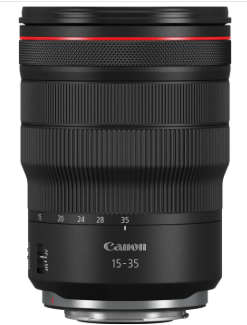
1) Canon RF 15-35mm f/2.8L IS USM

Get it from Amazon
The Canon RF 15-35mm f/2.8L IS USM is one of the best lenses for real estate photography. It delivers wide coverage, sharp detail, and reliable performance. As a result, it helps you capture interiors in a clean and professional way.
To begin with, the 15–35mm focal range is ideal for property shoots. You can photograph tight rooms at 15mm. Then, you can zoom in to 35mm for details like finishes and décor. This flexibility makes it easy to handle different spaces without switching lenses.
Moreover, the constant f/2.8 aperture performs well in low light. Indoor spaces often lack enough lighting. However, this lens allows you to maintain brightness without pushing ISO too high. In addition, the 5-stop image stabilization helps reduce blur when shooting handheld.
Image quality is also impressive. The lens uses three aspherical elements and two UD elements. Because of this, distortion is well controlled and edges stay sharp. Straight lines remain natural, which is important for walls and architectural features.
Focusing is fast and smooth. The Nano USM motor ensures silent autofocus. Therefore, it works well for both photos and video walkthroughs. You can also shoot close-ups thanks to a minimum focusing distance of 28cm.
Finally, the build quality is strong. It belongs to Canon’s L-series. So, it includes weather sealing and protective coatings. This means you can shoot in different conditions without worry. The control ring also lets you adjust settings quickly while shooting.
Specifications
- Focal length: 15–35mm
- Maximum aperture: f/2.8
- Image stabilization: up to 5 stops
- Optical design: 3 aspherical elements and 2 UD elements
- Aperture blades: 9
- Autofocus: Nano USM motor
- Minimum focusing distance: 28 cm
- Max focal length: 35 mm
Pros
- Wide focal range suits small and large rooms
- Excellent sharpness across the frame
- Effective image stabilization for handheld shots
- Fast and silent autofocus
- Strong build with weather protection
- Performs well in low light
Cons
- Expensive compared to other options
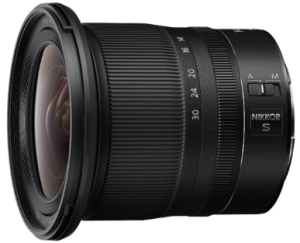
2) Nikon Z 14-30mm f/4 S
Get it on Amazon
The Nikon Z 14-30mm f/4 S is a strong choice for real estate photography. It offers wide coverage, sharp detail, and a compact design. As a result, it suits photographers who need quality without extra bulk.
To start, the 14–30mm focal range works well for interiors. You can capture entire rooms at 14mm. Then, you can zoom in to 30mm for tighter compositions. This makes it easy to shoot both wide layouts and finer details in one session.
In addition, the fixed f/4 aperture provides consistent exposure. While it is not as bright as f/2.8, it still performs well in most indoor settings. Therefore, it pairs nicely with natural light or tripod use, which is common in real estate work.
Image quality is impressive. The lens is designed for Nikon Z cameras, so it delivers clean and sharp results. Distortion is well controlled, which helps keep walls straight. This is important when photographing interiors and architectural spaces.
Moreover, the compact build makes it easy to carry. The retractable design allows the lens to collapse to a smaller size. Because of this, it fits easily into a camera bag and is convenient for travel between properties.
Focusing is smooth and quiet. The stepping motor ensures fast autofocus without noise. This is useful for both still images and video tours. As a result, you can switch between shooting styles without distraction.
Specifications
- Focal length: 14–30mm
- Maximum aperture: f/4
- Lens type: ultra wide zoom
- Autofocus system: stepping motor
- Minimum size: retractable to about 3.5 inches
- Mount: Nikon Z mount
- Design: optimized for mirrorless cameras
Pros
- Very wide focal range for tight spaces
- Compact and lightweight design
- Sharp images with good distortion control
- Smooth and quiet autofocus
- Easy to carry and travel with
Cons
- Aperture is less bright than f/2.8 lenses
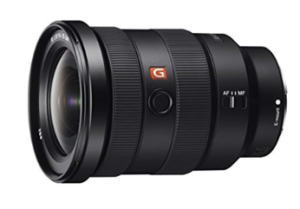
3) Sony FE 16-35mm f/2.8 GM
Get it on Amazon
The Sony FE 16-35mm f/2.8 GM is a premium option for real estate photography. It delivers high resolution, wide coverage, and consistent performance. As a result, it suits professionals who want clean and detailed interior images.
To begin with, the 16–35mm focal range is versatile. You can capture wide room layouts at 16mm. Then, you can zoom in to 35mm for detail shots. This flexibility helps you work efficiently without changing lenses.
Moreover, the constant f/2.8 aperture keeps exposure steady. This is useful when moving between rooms with different lighting. It also helps maintain depth of field control. Therefore, you can shoot in low light while preserving image quality.
Image clarity is excellent. The lens is designed to achieve 50 line pairs per millimeter resolving power. In addition, it uses two extreme aspherical elements. These improve sharpness and reduce distortion. Because of this, straight lines remain accurate, which is important in real estate photography.
Focusing is smooth and reliable. The lens offers a minimum focusing distance of 0.28 meters. This allows you to capture close details when needed. At the same time, autofocus remains fast and quiet, making it suitable for both photos and video.
Build quality is also impressive. The G Master design ensures strong construction and refined optics. The 11 blade aperture creates smooth background blur when needed. It also comes with a hood, caps, and a protective case for convenience.
Specifications
- Focal length: 16–35mm
- Maximum aperture: f/2.8
- Minimum focusing distance: 0.28 m
- Maximum magnification: 0.19x
- Aperture blades: 11
- Angle of view: 107° to 63°
- Optical design: includes 2 extreme aspherical elements
- Mount: Sony E mount
- Accessories: hood, front cap, rear cap, case
Pros
- Excellent sharpness and high resolution
- Wide zoom range for interiors
- Constant aperture for consistent exposure
- Strong build and premium design
- Smooth and quiet autofocus
- Good control of distortion
Cons
- High price compared to alternatives
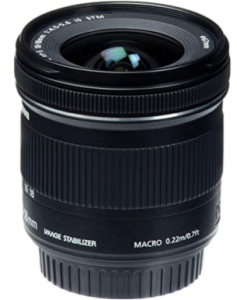
4) Canon EF-S 10-18mm f/4.5-5.6 IS STM
Get it on Amazon
The Canon EF-S 10-18mm f/4.5-5.6 IS STM is a great entry level option for the best camera lens for real estate photography. It offers wide coverage, useful features, and a lightweight design. As a result, it is ideal for beginners and budget conscious photographers.
To begin with, the 10–18mm focal range is very wide on APS C cameras. This allows you to capture full rooms even in tight spaces. Then, you can adjust framing easily without moving too much. Therefore, it works well for apartments and smaller interiors.
In addition, the lens delivers good image quality for its class. It uses an aspherical element and a UD element. Because of this, it reduces distortion and improves sharpness. Images appear clear with decent contrast, which is important for property listings.
Moreover, the built in optical image stabilizer helps reduce camera shake. This provides up to four stops of correction. As a result, you can shoot handheld in lower light conditions. This is helpful when a tripod is not available.
Focusing is smooth and quiet. The stepping motor supports silent autofocus. Therefore, it is suitable for both photos and video tours. The lens also supports full time manual focus, so you can fine tune your shots easily.
The compact and lightweight build makes it easy to carry. It pairs well with EOS APS C cameras. Because of this, it is a practical option for everyday shooting and travel between locations.
Specifications
- Focal length: 10–18mm
- Maximum aperture: f/4.5–5.6
- Closest focusing distance: 0.22 m
- Image stabilization: up to 4 stops
- Autofocus system: stepping motor
- Aperture blades: 7
- Optical design: includes aspherical and UD elements
- Lens type: EF S mount for APS C cameras
Pros
- Very wide angle for small spaces
- Lightweight and easy to carry
- Affordable option for beginners
- Effective image stabilization
- Smooth and quiet autofocus
- Good image quality for the price
Cons
- Variable aperture limits low light performance
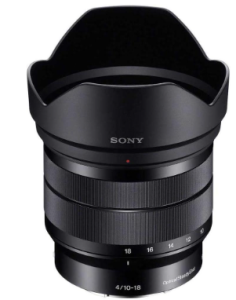
5) Sony E 10-18mm f/4 OSS
Get it on Amazon
The Sony E 10-18mm f/4 OSS is a reliable choice to consider when choosing the best camera lens for real estate photography. It offers wide coverage, steady performance, and a compact design. As a result, it works well for photographers using Sony APS C cameras.
To begin with, the 10–18mm focal range provides a very wide field of view. It delivers an angle of view from 109° to 76°. This allows you to capture entire rooms with ease. Therefore, it is useful for small interiors where space is limited.
In addition, the constant f/4 aperture keeps exposure consistent. While it is not the brightest option, it still performs well in most indoor settings. You can pair it with natural light or a tripod for better results.
Image quality is strong for its class. The lens uses aspherical elements and ED glass. Because of this, it reduces distortion and chromatic issues. Images appear sharp with good contrast, which is important for property photos.
Moreover, built in Optical SteadyShot helps reduce blur. The stabilization system uses sensors to detect movement and correct it. As a result, handheld shooting becomes easier, especially in low light.
Focusing is smooth and efficient. The internal focus system keeps the lens length constant. This improves balance and handling. It also allows fast autofocus and a short minimum focusing distance of 0.25 meters.
The lens also produces smooth background blur thanks to circular aperture blades. While real estate photography focuses more on sharpness, this feature can still help when capturing detail shots.
Specifications
- Focal length: 10–18mm
- Maximum aperture: f/4
- Minimum aperture: f/22
- Angle of view: 109° to 76°
- Minimum focusing distance: 0.25 m
- Maximum magnification: 0.1x
- Image stabilization: Optical SteadyShot
- Lens type: APS C Sony E mount
Pros
- Very wide angle for tight spaces
- Built in image stabilization
- Lightweight and compact design
- Good sharpness and contrast
- Smooth and quiet focusing
- Consistent exposure with f/4 aperture
Cons
- Aperture not ideal for very low light
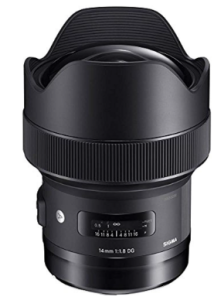
6) Sigma 14mm f/1.8 DG HSM Art
Get it on Amazon
The Sigma 14mm f/1.8 DG HSM Art is a unique option when it comes to choosing the best camera lens for real estate photography. It combines an ultra wide view with a very bright aperture. As a result, it works well for photographers who want sharp images and strong low light performance.
To begin with, the fixed 14mm focal length captures wide spaces with ease. It allows you to photograph entire rooms in a single frame. Therefore, it is useful for tight interiors and dramatic perspectives. However, since it is a prime lens, you need to move physically to adjust framing.
In addition, the f/1.8 aperture is very bright. This helps in low light conditions such as indoor shoots with limited lighting. You can keep ISO lower and maintain image quality. It also allows some background blur for detail shots, which adds variety to property images.
Image quality is a strong point. The lens uses a large aspherical element along with FLD and glass elements. Because of this, distortion and chromatic issues are well controlled. Lines remain clean, which is important when photographing walls and architectural features.
Moreover, the super multi layer coating reduces flare and ghosting. This improves contrast, especially when shooting near windows or bright light sources. As a result, images look clearer and more balanced.
Focusing is fast and smooth. The hyper sonic motor provides quiet autofocus. It also supports full time manual focus, so you can fine tune your shots easily. The lens can focus as close as about 10.6 inches, which is useful for capturing details.
Build quality is also reliable. The lens is made with durable materials and a brass mount. It performs well in different temperatures and conditions. This makes it suitable for frequent use across multiple locations.
Specifications
- Focal length: 14mm
- Maximum aperture: f/1.8
- Lens type: ultra wide prime
- Autofocus system: hyper sonic motor
- Minimum focusing distance: about 10.6 inches
- Optical design: includes aspherical, FLD, and glass elements
- Coating: super multi layer coating
- Mount: available for Canon EF and other mounts
- Build: thermally stable composite with brass mount
Pros
- Very wide angle for capturing full rooms
- Excellent low light performance
- High sharpness and strong image quality
- Good control of flare and ghosting
- Fast and quiet autofocus
- Durable construction
Cons
- Fixed focal length limits flexibility
Read also: 5 Top rated thermal monocular
Factors to Consider when Choosing the Best Camera Lens for Real Estate Photography
Hre are 8 well explained factors to consider when choosing the best camra lens for real estate photography;
1. Focal length
First, focal length determines how much of a room you can capture. Wide angles allow you to show more space in one frame. Therefore, they are essential for small rooms and interiors. However, going too wide can distort the image. So, it is important to balance width with realism.
2. Aperture
Next, aperture affects brightness and depth of field. A wider aperture helps in low light conditions. In contrast, a narrower aperture keeps more of the scene in focus. For real estate, you often want everything sharp. Therefore, consistent aperture performance is more useful than extreme brightness.
3. Image stabilization
In addition, image stabilization helps reduce blur. This is useful when shooting handheld. It also allows slower shutter speeds in low light. As a result, you can capture clearer images without always using a tripod.
4. Distortion control
Another key factor is distortion. Wide lenses can bend straight lines. This can make walls and furniture look unnatural. Therefore, good distortion control is important for clean and professional results.
5. Sharpness across the frame
Moreover, sharpness should be consistent from center to edges. Real estate images include many straight lines and details. If edges are soft, the image looks less professional. So, strong edge to edge clarity is important.
6. Autofocus performance
Focusing speed and accuracy also matter. Fast autofocus helps you work quickly. At the same time, quiet focusing is useful for video tours. Therefore, smooth and reliable focus improves both photos and videos.Therefore dont forget to consider this option when hunting for the best camera lens for real estate photography.
7. Build quality and size
Furthermore, build quality affects durability. A strong lens handles frequent use and travel better. However, size and weight also matter. A lighter lens is easier to carry between properties. So, a balance between durability and portability is ideal.
8. Compatibility with your camera
Finally, compatibility is essential. Not all lenses work with every camera. You need to match the lens mount and sensor type. Otherwise, you may lose features or image quality. Therefore, always choose a lens designed for your camera system.
Best Camera Lens for Real Estate Photography FAQs
Conclusion