

In this guide, I will explore the Best Telescope for Viewing Planets. First, I will explain the key features that affect how clearly you can see planets like Jupiter, Saturn, and Mars. Next, I will share top picks that offer strong performance for different budgets and experience levels.
In addition, I will walk you through a simple buying guide to help you choose the right telescope based on your needs. Moreover, I will answer common FAQs to clear up any confusion. As a result, you will have everything you need to confidently choose the best telescope for viewing planets and enjoy clear views of the night sky.
Best Telescope for Viewing Planets
1) Celestron NexStar 8SE

Get it on Amazon
The Celestron NexStar 8SE is a strong choice for anyone serious about viewing planets in detail. It blends advanced technology with a classic design. As a result, it feels modern yet familiar. It suits users ready to move beyond basic telescopes.
First, the 8 inch Schmidt Cassegrain optics deliver impressive clarity. The large aperture gathers enough light for sharp planetary views. You can see Saturn’s rings clearly. You can also notice cloud bands on Jupiter and surface details on Mars. In addition, it performs well on deep sky objects like galaxies and clusters, making it a versatile option.
Next, the fully computerized GoTo mount makes observing much easier. You simply select an object from the NexStar plus hand control. Then the telescope moves automatically and tracks it. This saves time and removes guesswork. It is especially helpful if you are not familiar with the night sky.
Moreover, the SkyAlign system simplifies setup. You only need to center three bright objects. The telescope calculates your position and aligns itself within minutes. Even beginners can get started quickly. Because of this, you spend more time observing and less time setting up.
The telescope is also compact and portable. Despite its power, it is easy to carry and set up. Furthermore, it supports many accessories. You can upgrade with WiFi control, GPS, or auto alignment tools as your skills improve. This makes it a long term investment.
Finally, the optical quality stands out in real use. With higher magnification, fine details like Saturn’s ring division become visible. Jupiter’s Great Red Spot can also be seen under good conditions. Lower magnification works well for larger objects like nebulae and galaxies. Overall, the viewing experience is sharp and satisfying.
Specifications
- Optical design: Schmidt Cassegrain
- Aperture: 203 mm 8 inch
- Focal length: 2032 mm
- Focal ratio: f 10
- Mount type: Single fork arm computerized GoTo
- Database: 40000 plus celestial objects
- Alignment system: SkyAlign
Pros
- Excellent optical clarity for planets and Moon
- Easy object tracking with GoTo system
- Fast and simple alignment process
- Portable for its size
- Large object database for exploration
- Upgrade friendly with many accessories
Cons
- Accessories feel basic
2) Celestron NexStar 4SE
Get it on Amazon
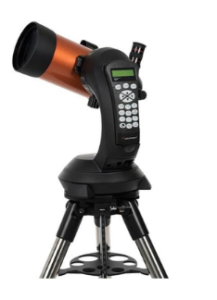
The Celestron NexStar 4SE is a great choice if you want a compact and easy telescope for viewing planets. It combines modern technology with a classic design. As a result, it works well for beginners who want clear planetary views without complicated setup.
First, the Maksutov Cassegrain optics deliver sharp and high contrast images. This design is known for crisp detail. Therefore, it performs well for planetary observation. You can clearly see features like Jupiter’s cloud bands and Saturn’s rings. In addition, the StarBright XLT coatings improve light transmission. This helps produce brighter and clearer images, especially when viewing planets and the Moon.
Next, the computerized system makes finding planets simple. The telescope works smoothly with alignment tools and software. The included StarPointer finderscope helps you locate objects accurately. Also, the included astronomy software gives access to thousands of celestial objects. Because of this, beginners can explore the night sky with confidence.
Moreover, the sturdy steel tripod improves stability. This is important for planet viewing, where even small vibrations can affect clarity. The built in wedge also allows basic astrophotography. While it is not designed for advanced imaging, it gives beginners a chance to try capturing planetary views.
In addition, this bundle includes an eyepiece and filter kit. This expands your viewing options right away. You can switch magnification levels easily. As a result, you get better flexibility when observing planets and other objects.
Overall, the NexStar 4SE focuses on simplicity and portability. It is lightweight and easy to carry. Therefore, it is ideal for quick observing sessions. If you want a reliable and beginner friendly telescope for viewing planets, this model is a solid option.
Specifications
- Optical design: Maksutov Cassegrain
- Aperture: 102 mm 4 inch
- Coatings: StarBright XLT
- Mount type: Computerized GoTo
- Tripod: Steel tripod with built in wedge
- Finder scope: StarPointer
- Software: TheSkyX First Light Edition
Pros
- Sharp and high contrast views for planets
- Easy to use for beginners
- Stable tripod improves viewing experience
- Lightweight and portable
- Comes with useful accessories bundle
- Good entry point for planetary astrophotography
Cons
- Smaller aperture limits deep sky performance
3) Celestron AstroMaster 130EQ
Get it on Amazon
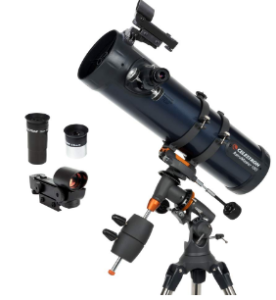
The Celestron AstroMaster 130EQ is a strong option for beginners who want a powerful yet affordable telescope for viewing planets. It combines solid optics with manual control. As a result, it gives you a more hands on astronomy experience while still delivering clear planetary views.
First, the 130 mm Newtonian reflector provides good light gathering ability. This is important for planetary observation. You can see Saturn’s rings, Jupiter’s moons, and lunar craters with satisfying detail. In addition, the aluminum and SiO₂ coatings improve brightness and contrast. Therefore, images appear sharper and more defined, especially when observing planets.
Next, the equatorial mount allows smooth and accurate tracking. It uses slow motion control knobs for precise adjustments. This makes it easier to follow planets as they move across the sky. Although it is manual, it helps you learn how the sky moves. Because of this, it is a great learning tool for beginners interested in viewing planets more seriously.
Moreover, setup is quick and simple. You do not need tools. You can go from unboxing to observing in minutes. The adjustable tripod adds stability. This is useful when focusing on planets, where steady viewing matters. It also allows comfortable use whether sitting or standing.
In addition, the included accessories improve the experience. You get two eyepieces for different magnification levels. This helps when switching between wider views and closer planetary detail. The StarPointer finder makes locating planets easier. Also, the included astronomy software helps plan your sessions.
Overall, the AstroMaster 130EQ offers a balance of performance and affordability. It is not automated, but it provides a rewarding experience. If you want to learn and still enjoy clear planet viewing, this telescope is a solid pick.
Specifications
- Optical design: Newtonian reflector
- Aperture: 130 mm 5 inch
- Coatings: Aluminum and SiO₂
- Mount type: German equatorial mount
- Control: Manual slow motion controls
- Eyepieces: 20 mm and 10 mm
- Finder scope: StarPointer red dot
- Weight: about 7.7 kg
Pros
- Good aperture for clear planetary views
- Affordable entry level telescope for viewing planets
- Smooth manual tracking with equatorial mount
- Quick and easy setup
- Includes useful accessories
- Lightweight and portable
Cons
- Manual tracking requires practice
4) Sky-Watcher Skymax 150
Get it on Amazon
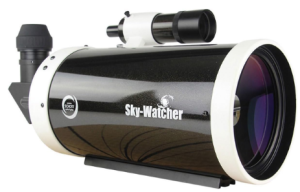
The Sky-Watcher Skymax 150 is a powerful option for anyone focused on viewing planets with high detail. It uses a Maksutov Cassegrain design. As a result, it delivers sharp and high contrast images in a compact body. This makes it ideal for planetary observation.
First, the 150 mm aperture provides strong light gathering ability. Combined with its long focal length, it produces excellent magnification. Therefore, it is well suited for planet viewing. You can observe fine details like Saturn’s rings, Jupiter’s cloud bands, and lunar surface features with clarity. In addition, the matched optics and coated corrector plate improve contrast. This creates darker backgrounds and sharper planetary images.
Next, the optical coatings enhance performance further. The borosilicate primary mirror includes aluminum and quartz coatings. This delivers about 94 percent reflectivity. Because of this, more light reaches your eye. As a result, images appear brighter and more detailed when viewing planets and the Moon.
Moreover, the fully baffled tube reduces stray light. This improves image contrast. It is especially useful for planetary observation, where clarity matters. The meniscus corrector plate also reduces optical errors. Therefore, you get clean and accurate views without distortion.
In addition, the telescope is compact and portable for its size. It offers a large aperture without being bulky. The Vixen style dovetail allows easy mounting on many tripods. This gives you flexibility to upgrade your setup. Also, the included accessories help you get started immediately. You receive a 28 mm eyepiece, star diagonal, and a finderscope for easy targeting.
Furthermore, this telescope is suitable for basic planetary imaging. Its long focal length helps capture detailed images without extra lenses. Because of this, it is a good option if you want to try astrophotography focused on planets.
Overall, the Skymax 150 is built for serious planet viewing. It delivers high contrast, sharp detail, and reliable performance in a compact design.
Specifications
- Optical design: Maksutov Cassegrain
- Aperture: 150 mm 6 inch
- Mirror material: Borosilicate
- Reflectivity: about 94 percent
- Coatings: Aluminum with quartz overcoat and MHTC
- Mount compatibility: Vixen style dovetail
- Tube design: Fully baffled
Pros
- Excellent contrast for planetary viewing
- Sharp and detailed images of planets
- High light transmission improves brightness
- Compact design for its aperture
- Good option for planetary imaging
- Includes useful accessories
Cons
- Mount not included in most setups
5) Orion SkyQuest XT6
Get it on Amazon
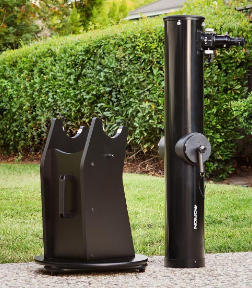
The Orion SkyQuest XT6 is a great choice if you want a simple and powerful telescope for viewing planets. It uses a Dobsonian design. As a result, it focuses on ease of use and solid performance without complex setup. This makes it ideal for beginners and casual observers who want clear planetary views.
First, the 6 inch parabolic mirror delivers strong optical performance. It gathers enough light to show detailed views of planets. You can clearly see Saturn’s rings and Jupiter’s cloud bands. In addition, the mirror design improves image accuracy. Therefore, it provides sharp and bright images, which is important for planetary observation.
Next, the manual point and view system keeps things simple. There are no complicated controls or alignment steps. You just move the telescope toward your target. Because of this, it is easy to start observing quickly. It also helps you learn the night sky while enjoying planet viewing.
Moreover, the Dobsonian base provides excellent stability. This is important when observing planets at high magnification. The base reduces vibration and allows smooth movement. As a result, tracking planets manually becomes easier and more comfortable.
In addition, the 2 inch Crayford focuser improves focusing precision. It supports both 1.25 inch and 2 inch eyepieces. This gives you flexibility to adjust magnification. The included 2x Barlow lens doubles your magnification. Therefore, you can get closer views of planets without buying extra accessories.
Furthermore, this telescope includes several useful extras. You get star maps, a guidebook, and a flashlight for night use. There is also a smartphone adapter. This allows you to take basic photos of planets through the eyepiece. Because of this, the package offers great value for beginners.
Overall, the SkyQuest XT6 delivers a balance of simplicity and performance. It is easy to use and powerful enough for detailed planet viewing.
Specifications
- Optical design: Newtonian reflector
- Aperture: 150 mm 6 inch
- Mirror type: Parabolic primary mirror
- Mount type: Dobsonian base
- Focuser: 2 inch Crayford with 1.25 inch adapter
- Magnification support: Compatible with Barlow lens
- Included accessories: 2x Barlow lens, star maps, guidebook, flashlight, smartphone adapter
Pros
- Excellent image quality for viewing planets
- Simple and beginner friendly design
- Stable base reduces vibration
- Smooth manual tracking
- Good value with many included accessories
- Flexible eyepiece compatibility
Cons
- No computerized tracking
6) Celestron StarSense Explorer DX 130AZ
Get it on Amazon
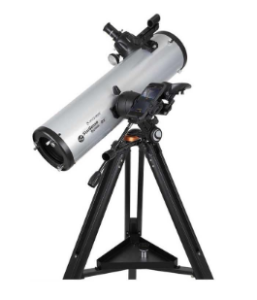
The Celestron StarSense Explorer DX 130AZ is a modern and beginner friendly option for viewing planets with ease. It combines solid optics with smartphone guidance. As a result, it removes the frustration of finding planets and makes stargazing simple and enjoyable.
First, the 130 mm Newtonian reflector provides good light gathering ability. This is important for planetary observation. You can see clear views of Jupiter, Saturn, and Mars. In addition, the high reflectivity coatings improve brightness and clarity. Therefore, planetary details appear sharper and more visible.
Next, the StarSense technology changes how you find objects. You dock your smartphone and launch the app. Then the system analyzes the sky in real time. It guides you with arrows until your target is centered. Because of this, even beginners can easily locate planets without prior knowledge. This makes it one of the easiest telescopes for viewing planets.
Moreover, the app suggests the best objects to observe based on your time and location. This helps you focus on visible planets each night. As a result, you spend less time searching and more time observing. The guided system is especially useful in areas with light pollution.
In addition, the manual altazimuth mount is simple to use. It features slow motion controls for smooth adjustments. This allows you to track planets easily once they are in view. The setup is also quick, so you can start observing within minutes.
Furthermore, the telescope includes useful accessories. You get two eyepieces for different magnification levels. This helps when switching between wider views and closer planetary detail. The red dot finder and smartphone dock improve accuracy and ease of use.
Overall, this telescope focuses on convenience without sacrificing performance. It is ideal for beginners who want a simple way to enjoy planet viewing with modern technology.
Specifications
- Optical design: Newtonian reflector
- Aperture: 130 mm 5 inch
- Mount type: Manual altazimuth
- Control: Dual axis slow motion controls
- Technology: StarSense smartphone sky recognition
- Compatibility: iOS and Android smartphones
- Eyepieces: 10 mm and 25 mm
Pros
- Very easy to use for viewing planets
- Smartphone guidance simplifies object location
- Good image quality for planets and Moon
- Quick setup and beginner friendly
- Includes useful accessories
- Works well in light polluted areas
Cons
- Requires a smartphone to use full features
Read also: 5 Best Portable Telescope for Viewing Planets and Galaxies
Factors to Consider when Choosing the Best Telescope for Viewing Planets
1) Aperture size
First, aperture is the most important factor. It refers to the diameter of the main lens or mirror. A larger aperture gathers more light. As a result, you see brighter and sharper planetary details. For planet viewing, at least 90 mm works, while 150 mm or more gives much better clarity.
2) Optical design
Next, consider the optical design. Common types include refractors, reflectors, and Maksutov or Schmidt systems. Each design handles light differently. For example, some provide higher contrast while others offer wider views. For planetary observation, designs that deliver sharp and high contrast images are preferred.
3) Focal length and magnification
In addition, focal length plays a big role. A longer focal length allows higher magnification. This is useful for seeing small planetary features. However, magnification should remain balanced. Too much magnification without good optics reduces image quality.
4) Mount type and stability
Moreover, the mount affects how steady your view is. A stable mount reduces shaking. This is important when observing planets at high magnification. Some mounts are manual, while others track objects automatically. Smooth movement makes it easier to follow planets across the sky.
5) Ease of use
Another factor is how easy the telescope is to use. Some models require alignment and setup knowledge. Others are more beginner friendly. If setup is simple, you will spend more time observing. Therefore, ease of use is important, especially for beginners.
6) Portability
Furthermore, consider portability. Larger telescopes offer better views, but they can be heavy. A portable telescope is easier to carry and set up. This is useful if you plan to move between locations for better viewing conditions.
7) Accessories and compatibility
Also, check the included accessories. Eyepieces, finderscopes, and software improve your experience. In addition, compatibility with upgrades is helpful. This allows you to improve performance over time without replacing the whole telescope.
8) Budget and value
Finally, think about your budget. More expensive telescopes often offer better optics and features. However, there are good options at lower prices. The goal is to find a balance between cost and performance. This ensures you get the best telescope for viewing planets within your range.
Best Telescope for Viewing Planets FAQs
What size telescope is best for viewing planets
First, aperture size matters most. A telescope with at least 90 mm works well. However, 130 mm to 150 mm gives much better detail. As a result, you can see clearer features like Saturn’s rings and Jupiter’s bands.
Do I need high magnification to see planets clearly
Not always. Magnification helps, but it is not everything. Good optics and steady viewing matter more. Therefore, a balanced setup gives sharper images than extreme magnification.
Are computerized telescopes better for planet viewing
It depends on your experience. Computerized telescopes are easier to use. They find and track planets automatically. On the other hand, manual telescopes are more affordable and help you learn the sky.
Can beginners use a telescope for viewing planets easily
Yes, beginners can start easily. Many telescopes are simple to set up and use. In addition, some models include guides or apps. Because of this, finding and viewing planets becomes much easier.
Conclusion
In conclusion, the Best Telescope for Viewing Planets combines strong optics, stable performance, and ease of use. First, larger apertures deliver sharper and brighter planetary details. Next, good optical designs improve contrast, making features like Saturn’s rings and Jupiter’s bands easier to see. In addition, stable mounts help keep planets steady at high magnification.
Moreover, user friendly features such as simple setup, manual control, or smart guidance make observing more enjoyable. Also, portability and useful accessories improve the overall experience. Therefore, these telescopes stand out because they balance clarity, convenience, and value. As a result, they give both beginners and experienced users a clear and rewarding way to explore the planets.