

Best Range finders for Shooting
1) Leupold RX-5000 TBR/W

Get it on Amazon
The Leupold RX-5000 TBR/W delivers exceptional performance for serious shooters and hunters. This rangefinder combines cutting-edge technology with practical field features. It offers capabilities that extend well beyond standard models in its class.
The Pinning feature sets this rangefinder apart from competitors. When paired with the Leupold Control App, you can remotely place GPS waypoints on digital maps. This includes popular platforms like onX Hunt.
Additionally, this function proves invaluable for marking property boundaries during scouting trips. Furthermore, it helps you navigate through challenging terrain with confidence. Most importantly, it makes tracking and recovering downed animals significantly easier.
The True Ballistic Range/Wind (TBR/W) technology transforms long-range accuracy. This system provides ballistically calculated ranges for precise shots at extended distances. Moreover, it accounts for steep angles that would otherwise throw off your calculations.
The wind compensation feature generates hold points for 10-mph crosswinds at 90-degree angles. Consequently, you can make accurate adjustments out to 800 yards without complex mental math.
Specifications
- Model: 184681
- Maximum Range: 5,000+ yards
- Technology: TBR/W with DNA
- Wind Compensation: 10-mph at 90 degrees, up to 800 yards
- GPS Integration: Pinning feature with Leupold Control App
- Targeting Modes: Last Target, Long Range
- App Compatibility: onX Hunt and other digital mapping platforms
Pros
- Easy GPS waypoint placement through smartphone app
- Extremely long ranging capability exceeding three miles
- Ballistic calculations account for angle and wind
- Last Target mode ignores brush and vegetation
- Long Range Mode gathers multiple laser pulses for extended distance
Cons
- Higher price point compared to basic rangefinders
2) Maven RF.1
Get it on Amazon
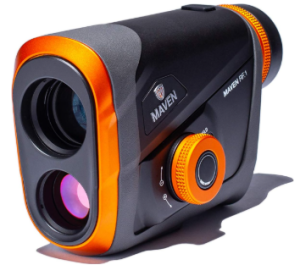
The Maven RF.1 represents a premium rangefinder delivered without the premium price tag. Maven builds this unit using the same award-winning glass found in their S, B, and RS Series optics.
Furthermore, they pair these exceptional materials with modern technology to create an uncompromising tool. The direct-to-consumer business model eliminates retail markup. Consequently, shooters receive exceptional value for their investment.
Maven’s acclaimed glass technology drives the RF.1’s impressive performance. The optics deliver brightness and clarity that rival much more expensive competitors. Moreover, the 7×25 magnification provides detailed target identification at extended distances.
The lens features waterproof and fogproof construction for reliable field use. Additionally, scratch-resistant coatings protect the glass during demanding hunts and range sessions. This durability ensures consistent performance across varied conditions.
Specifications
- Model: Maven RF.1
- Magnification: 7×25
- Ranging Distance: 5 to 4,500 yards
- Angle Compensation: Line of sight with angle correction
- Environmental Modes: Field/Forest Function
- Construction: Waterproof and fogproof
Pros
- Award-winning glass provides exceptional clarity and brightness
- Direct-to-consumer pricing offers tremendous value
- Extensive ranging capability covers all shooting distances
- Field/Forest modes adapt to different environments
- Unconditional lifetime warranty covers all non-cosmetic damage
- Tripod adapter enables stable long-range use
Cons
- May lack some advanced ballistic features found on premium models
3) Maven CRF.1

Get it on Amazon
The Maven CRF.1 combines user-friendly design with professional-grade performance. This rangefinder delivers accurate measurements in a compact package that won’t weigh you down. Maven engineered this unit to provide reliable ranging without unnecessary complexity. The result is a tool that works seamlessly in diverse shooting environments.
The quick access menu makes the CRF.1 remarkably easy to operate. Users can navigate settings without fumbling through complicated button sequences. Furthermore, the auto black/red display adapts to lighting conditions automatically.
This intelligent feature ensures readability whether you’re glassing at dawn or midday. The display switches between black text on bright backgrounds and red text in low light. Consequently, you maintain clear visibility regardless of environmental conditions.
Maven’s commitment to quality optics shines through in the CRF.1. The image quality delivers exceptional clarity and brightness that rivals much larger units. High contrast imaging helps distinguish targets from backgrounds in challenging conditions.
The compact dimensions measure just 4.3 inches by 2.9 inches by 1.9 inches. At only 8 ounces, this rangefinder disappears in your pack or pocket. Despite its small size, the construction feels solid and substantial. The unit handles daily field use without compromise.
Specifications
- Model: Maven CRF.1
- Ranging Distance: 5 to 2,400 yards
- Precision: 0.5 yard increments to 200 yards, 1 yard beyond
- Display: Auto black/red adaptive system
- Angle Compensation: Line of sight with angle correction
- Obstruction Filter: Field/Forest function
- Dimensions: 4.3 x 2.9 x 1.9 inches
Pros
- Auto black/red display adapts to lighting conditions automatically
- Half-yard precision up to 200 yards benefits bow hunters
- Compact size and light weight enhance portability
- Exceptionally clear and bright optical performance
- High contrast imaging aids target identification
Cons
- Maximum range lower than some premium competitors
4) Sig Sauer KILO4K

Get it on Amazon
The Sig Sauer KILO4K represents the pinnacle of modern rangefinder technology. This unit integrates multiple advanced systems into a single platform. Sig Sauer engineered the KILO4K for shooters who demand both accuracy and speed. The result is a rangefinder that outperforms competitors in its class across multiple categories.
The KILO4K features Sig Sauer’s Optical Image Stabilization system. This technology eliminates user-induced hand shake and vibration from the viewing experience. Consequently, you maintain a crisp, clear image even when ranging at extended distances.
Traditional rangefinders struggle with stability when targeting small objects beyond 1,000 yards. However, the KILO4K’s stabilization system keeps your view steady and focused. This capability proves invaluable when making critical distance calls on distant targets.
Lumatic display technology adapts to lighting conditions intelligently. This system prevents your pupil from constricting in low light situations. Traditional bright displays cause your eyes to adjust, making it harder to reacquire your target.
Lumatic solves this problem by maintaining optimal brightness without compromising your natural vision. The Stealth ID design draws inspiration from Sig Sauer’s firearms division. This industrial design language creates a cohesive aesthetic across the company’s product line.
Specifications
- Model: Sig Sauer KILO4K
- Stabilization: Optical Image Stabilization
- Ballistics: Applied Ballistics Ultralite (user-configurable)
- Sensors: Onboard environmental monitoring
- Connectivity: BDX 2.0 Bluetooth system
- Scan Mode: 4x ultra-fast ranging
Pros
- Optical Image Stabilization eliminates hand shake for steady viewing
- Applied Ballistics Ultralite provides precise shooting solutions
- BDX 2.0 connects seamlessly with Sig riflescopes
- Onboard environmental sensors update ballistics in real time
- 4x scan mode enables rapid ranging of moving targets
Cons
- Higher price point reflects advanced technology package
5) Vortex Diamondback HD 2000
Get it Amazon
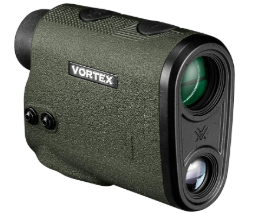
The Vortex Diamondback HD 2000 laser rangefinder delivers reliable performance for hunters across diverse terrain. This unit combines 7x magnification with a 24mm objective lens for clear target identification. The 2,000-yard maximum range handles most hunting scenarios with confidence. Moreover, the rangefinder reads game-sized targets out to 1,400 yards. This capability proves ideal for hunting in open country where long shots present themselves regularly.
The HD optical system uses carefully selected glass elements to maximize image quality. This design delivers exceptional resolution that eliminates chromatic aberration effectively. Color fidelity remains accurate across the entire field of view. Furthermore, XR lens coatings provide maximum light transmission through every optical surface.
These coatings enhance clarity and improve low-light performance significantly. Early morning and late evening glassing sessions benefit from this enhanced light gathering capability. The result is a bright, clear image that helps you identify targets with confidence.
ArmorTek lens coatings shield the optics from scratches, oil, and dirt. These protective coatings maintain optical clarity throughout demanding hunting seasons. The rubber armor exterior provides a secure, non-slip grip in wet conditions. This protective layer also absorbs impacts that would damage unprotected rangefinders.
Waterproof construction keeps internal components safe from rain, snow, and moisture. Shockproof design ensures the rangefinder survives drops and rough handling. The included soft carry case provides convenient access and additional protection. Whether you’re hunting mountains or prairies, this rangefinder handles tough field conditions.
Specifications
- Model: Vortex Diamondback HD 2000
- Magnification: 7x
- Objective Lens: 24mm
- Maximum Range: 2,000 yards
- Game Range: 1,400 yards
- Optical System: HD glass with XR coatings
- Display: Red OLED
Pros
- HD optical system delivers exceptional resolution and color fidelity
- XR lens coatings maximize light transmission for low-light use
- Red OLED display remains clear in dim conditions
- 2,000-yard maximum range covers extended distances
- Last mode ignores foreground brush and vegetation
- HCD mode provides angle-compensated measurements
- ArmorTek coatings protect lenses from damage
Limitations
- Game ranging capability limited to 1,400 yards
Read also; 6 Best Range Finders for Hunting
Factors to Consider when Choosing the Best Range finders for Shooting
1. Maximum Ranging Capability
The maximum distance a rangefinder can measure determines its suitability for your shooting style. Consider the typical distances you shoot and add a buffer for future needs. A unit that ranges to 2,000 yards works well for most hunting situations.
However, long-range precision shooters benefit from models reaching 4,000 yards or beyond. Furthermore, remember that maximum range specifications often reflect ideal conditions. Actual performance on game-sized targets typically falls shorter than advertised maximums.
2. Optical Quality and Magnification
Superior glass quality transforms your ranging experience significantly. High-definition optical systems deliver sharper images with better color accuracy. Moreover, quality coatings maximize light transmission for improved low-light performance.
Magnification levels typically range from 6x to 7x for hunting rangefinders. Higher magnification helps identify distant targets more easily. However, it also narrows your field of view and can amplify hand shake.
3. Angle Compensation Technology
Shooting uphill or downhill changes the actual distance your bullet travels. Angle compensation technology calculates the horizontal equivalent distance automatically. This feature proves essential for mountain hunting and varied terrain. The system accounts for the angle and provides a corrected range reading.
Consequently, you can hold for the adjusted distance rather than the line-of-sight measurement. Some units offer both line-of-sight and angle-compensated readings simultaneously. This flexibility allows you to choose the appropriate measurement for your situation.
4. Target Acquisition Modes
Different hunting and shooting scenarios require different target modes. Standard mode works well for open country with clear sight lines. However, Last Target mode proves invaluable when ranging through vegetation. This feature reads the farthest object in the laser’s path. Therefore, foreground brush and twigs don’t interfere with accurate readings.
Some rangefinders offer Field and Forest functions for environmental adaptation. Field mode prioritizes small, distant targets while ignoring larger backgrounds. Conversely, Forest mode ranges through trees and understory vegetation effectively.
5. Display Technology and Visibility
The display must remain readable across all lighting conditions you encounter. Red displays typically perform better in low light without ruining your natural night vision. Black displays work well in bright conditions but may fade at dawn or dusk. Auto-adjusting displays adapt to ambient light automatically for optimal visibility.
Furthermore, display brightness affects battery life and eye fatigue during extended use. OLED technology provides excellent contrast and clarity compared to LCD screens. The reticle design also impacts usability and precision.
6. Durability and Weather Resistance
Rangefinders face harsh conditions in the field regularly. Waterproof construction protects internal components from rain, snow, and humidity. Fogproof design prevents internal condensation during temperature changes.
Moreover, shockproof construction ensures the unit survives drops and impacts. Rubber armor provides grip in wet conditions while absorbing shocks. Lens protection coatings resist scratches from branches and abrasive materials.
7. Advanced Ballistics and Connectivity
Integrated ballistics features transform rangefinders into complete shooting solutions. Onboard ballistic calculators provide holdover or turret adjustments for your specific loads. Environmental sensors measure temperature, pressure, and humidity automatically.
These readings feed into ballistic calculations for improved accuracy. Furthermore, wind compensation features calculate holdoff for crosswinds at various distances. Bluetooth connectivity enables communication with riflescopes and smartphone applications.
8. Size, Weight, and Portability
The rangefinder’s physical dimensions affect how and when you’ll actually use it. Compact models disappear in pockets for easy access throughout the day. Larger units may offer better optics but become burdensome on long hunts. Weight matters significantly for backcountry hunters counting every ounce.
Conversely, some bulk provides stability when ranging at extreme distances. Tripod adaptability adds versatility for precision long-range work. The carry case design influences accessibility and protection during transport.
Best Range finders for Shooting FAQs
What’s the difference between maximum range and effective range on game?
Maximum range represents the farthest distance a rangefinder measures under ideal conditions. Manufacturers test this on large, reflective targets like buildings or trees. However, animals present smaller, less reflective targets.
Consequently, game ranging capability often falls 30-40% shorter than advertised maximums. A rangefinder rated for 2,000 yards might reliably range deer to 1,400 yards. Furthermore, rain, fog, and low light reduce performance significantly.
Therefore, choose a rangefinder with maximum range well beyond your typical shooting distances. This buffer ensures reliable readings when conditions aren’t perfect.
Do I really need angle compensation, and how does it work?
Angle compensation proves essential for accurate shooting on sloped terrain. When shooting uphill or downhill, the horizontal distance is shorter than the line-of-sight measurement. A 400-yard shot at a 30-degree angle has a horizontal component closer to 350 yards.
Without compensation, you’ll shoot high on both uphill and downhill shots. The technology measures the angle and calculates true horizontal distance automatically. Mountain hunters benefit most from this feature.
However, even moderate hills affect shot placement. Bow hunters particularly need it since arrows drop more than bullets. If you hunt flat terrain, it matters less. Conversely, mountainous terrain makes it mandatory.
What ranging modes should I look for, and when should I use them?
Line-of-sight mode provides direct distance without adjustments. This works well for flat terrain. Meanwhile, angle-compensated mode calculates horizontal distance for sloped shots. Standard target mode reads the closest object in the laser’s path.
This setting works perfectly in open country. However, Last Target mode reads the farthest object, ignoring foreground brush. Consequently, you can range game behind light cover. Field mode helps acquire small, distant targets while filtering backgrounds.
Forest mode ranges through trees and vegetation more effectively. Furthermore, scan mode enables continuous ranging for moving targets. Choose modes based on your primary hunting environment.
Is it worth investing in rangefinders with ballistic calculators and Bluetooth connectivity?
Advanced ballistic features transform rangefinders into complete shooting systems. Onboard calculators account for your ammunition, rifle setup, and environmental conditions. They provide exact holdover or turret adjustments instantly. Furthermore, environmental sensors measure temperature, pressure, and humidity automatically.
Long-range precision shooters and hunters taking shots beyond 500 yards benefit tremendously. Bluetooth connectivity enables communication with riflescopes and smartphone apps. However, these features increase cost substantially and require technical knowledge to configure. Battery life also decreases with continuous use.
Casual hunters shooting inside 300 yards rarely need advanced ballistics. Conversely, competitive shooters and serious long-range hunters benefit greatly. Consider whether the added capability justifies the investment for your application.
Conclusion