
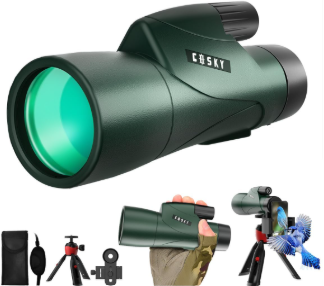
Best Monoculars for Stargazing deliver clear, bright, and steady views of the night sky without the bulk of larger equipment. In this guide, I cover the key features to consider, highlight top performing options, and explain how to choose the right monocular for your needs. In addition, I break down what matters most for night viewing, including brightness, magnification, and stability. Finally, I answer common FAQs so you gain confidence in selecting the right monocular and improve your overall stargazing experience.
Best Monoculars for Stargazing
1) Gosky 12×55 HD Monocular
Get it on Amazon
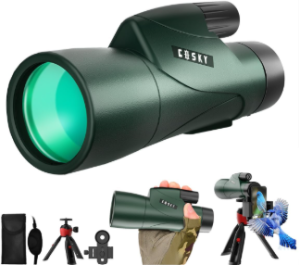
The Gosky 12×55 HD Monocular is a strong option when exploring the Best Monoculars for Stargazing. It combines portability with powerful optics, making it ideal for users who want clear night sky views without carrying heavy equipment. In addition, its bright image output makes it suitable for both beginners and casual astronomy enthusiasts.
Get it on Amazon
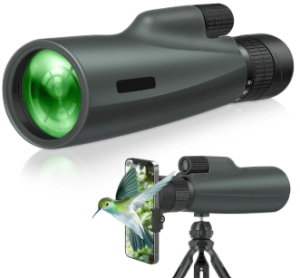
The Emarth High Power 10–30×50 Zoom Monocular is a versatile option when exploring the Best Monoculars for Stargazing. It offers adjustable magnification, which makes it suitable for both wide sky scanning and detailed lunar or planetary viewing. In addition, its zoom flexibility makes it useful for beginners who want more control over their stargazing experience.
The 10× to 30× zoom range allows smooth transitions between wide and close-up views. As a result, you can easily locate objects at lower magnification and then zoom in for more detail. Moreover, the 50 mm objective lens gathers enough light to keep images reasonably bright during dusk or moonlit conditions. This balance makes it practical for casual night sky observation.
Optical performance is improved through FMC multi-layer coatings and a BAK4 prism. Therefore, light transmission increases while glare is reduced. In addition, this combination helps produce clearer and sharper images, especially when viewing bright celestial objects like the Moon, Venus, and Jupiter.
Comfort also enhances usability. The 22 mm eyepiece produces brighter visuals and reduces eye strain during longer sessions. Furthermore, the anti-shake design helps minimize motion blur, which becomes more noticeable at higher zoom levels. As a result, viewing remains more stable and comfortable.
Durability is another advantage. The rubber-armored body improves grip and protects against impacts. In addition, the waterproof construction supports outdoor use in changing weather conditions. Therefore, it performs reliably during night hikes or field stargazing sessions.
The upgraded smartphone adapter and included tripod add extra value. Consequently, users can capture stable images of the Moon and bright objects with reduced shake. Moreover, the tripod improves stability at higher magnifications, making detailed viewing easier.
Key Specifications
• Magnification: 10× to 30×
• Objective lens: 50 mm
• Field of view: 240–114 ft per 1000 yds
• Prism type: BAK4
• Lens coating: FMC multi layer
Pros
• Flexible zoom range for different viewing needs
• Clear image quality with BAK4 and FMC optics
• Comfortable large eyepiece for longer use
• Strong grip and durable waterproof body
• Includes tripod and smartphone adapter
Cons
• Image stability becomes harder at maximum zoom
3) Hawke Endurance ED 10×42 Monocular
Get it on Amazon
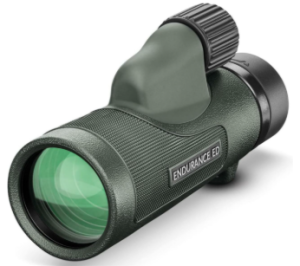
The Hawke Endurance ED 10×42 Monocular is a premium compact option when considering the Best Monoculars for Stargazing. It is designed for users who want sharp optical performance in a lightweight and travel friendly form. In addition, it delivers consistently clear views, making it suitable for observing the Moon, bright planets, and wide star fields.
The 10×42 configuration offers a balanced mix of portability and brightness. As a result, it gathers enough light for effective night sky viewing while still remaining easy to carry. Moreover, the Extra low Dispersion glass reduces color fringing, which improves clarity when viewing bright objects against dark skies.
Optical quality is further enhanced by fully multi coated lenses and phase corrected BAK4 prisms. Therefore, contrast remains strong and details appear more defined. In addition, light transmission improves, which helps maintain brightness during low light conditions. This makes the view cleaner and more enjoyable during stargazing sessions.
Handling is also well designed for comfort and control. The smooth two turn focus knob allows precise adjustments when switching between celestial objects. Furthermore, the rubber coated chassis improves grip and protects the monocular from minor impacts. As a result, it feels secure and reliable during outdoor use.
For added stability, the tripod thread allows mounting on a stand. Consequently, longer viewing sessions become more comfortable, especially when observing at higher magnification or tracking objects across the sky. This adds flexibility for both casual and more focused stargazing.
Key Specifications
• Magnification: 10×
• Objective lens: 42 mm
• Glass type: Extra low dispersion (ED) glass
• Prism type: Phase corrected BAK4 roof prisms
• Lens coating: Fully multi coated
Pros
• Sharp and high contrast images
• Lightweight and easy to carry
• Excellent optical clarity with ED glass
• Smooth and precise focusing system
• Tripod compatible for stable viewing
Cons
• Smaller aperture gathers less light than larger monoculars
4) Bushnell Legend Ultra HD 10×42 Monocular
Get it on Amazon
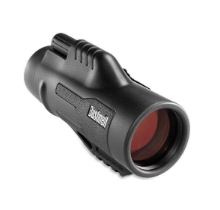
The Bushnell Legend Ultra HD 10×42 Monocular is a dependable option when exploring the Best Monoculars for Stargazing. It offers a compact design combined with strong optical performance, making it suitable for users who want bright and sharp night sky views without carrying bulky equipment. In addition, it performs well for both casual observation and more focused stargazing sessions.
The 10× magnification and 42 mm objective lens provide a balanced viewing experience. As a result, it works well for scanning star fields, observing the Moon, and tracking bright planets. Moreover, its portability makes it easy to carry during outdoor night walks or travel sessions.
Optical performance is enhanced through ED Prime glass, which reduces chromatic aberration and improves color accuracy. Therefore, bright objects appear cleaner against dark skies. In addition, Ultra Wide Band Coating increases light transmission, while PC-3 prism coating improves contrast and resolution. Together, these technologies deliver a clearer and more detailed image, especially in low light conditions.
Durability is another strong point. The rubber armored body improves grip and protects against impacts. Furthermore, the monocular is IPX7 waterproof and fog proof, with nitrogen purging and O ring seals that prevent internal moisture buildup. As a result, it remains reliable even in changing outdoor weather.
Usability is also well designed. The fast focus system allows smooth and quick adjustments between objects. In addition, the twist up eyecup improves comfort for both glasses and non glasses users. Consequently, long viewing sessions remain more comfortable and stable.
Key Specifications
• Magnification: 10×
• Objective lens: 42 mm
• Glass type: ED Prime glass
• Coatings: Ultra Wide Band and PC 3 prism coating
• Waterproof rating: IPX7
Pros
• Sharp and bright night sky views
• Strong low light optical performance
• Durable waterproof and fog proof construction
• Fast and smooth focusing system
• Comfortable eyecup design
Cons
• Smaller aperture gathers less light than larger models
5) Vortex Optics Solo R/T 8×36 Monocular
Get it on Amazon
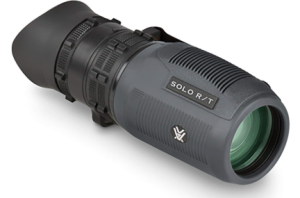
The Vortex Solo R/T 8×36 is a practical choice when exploring the Best Monoculars for Stargazing. It combines portability, durability, and clear optical performance in a compact design. In addition, it works well for users who want a lightweight tool for casual night sky observation and outdoor travel use.
The 8× magnification and 36 mm objective lens provide a balanced viewing experience. As a result, it delivers bright enough images for the Moon, constellations, and general star field scanning. Moreover, its small size makes it easy to carry during night walks or outdoor trips without adding bulk.
Optical clarity is enhanced by fully multi coated lenses with anti reflective coatings. Therefore, light transmission improves in low light conditions, helping maintain brightness and detail. In addition, the flared eyecup reduces stray light, which improves contrast during night viewing. It also folds down for glasses users, adding flexibility.
Focusing is straightforward and precise. The large focus wheel allows quick adjustments, while the reticle focus dial offers fine tuning when needed. Furthermore, the generous eye relief and exit pupil provide a stable and comfortable viewing experience. As a result, extended stargazing sessions feel less tiring.
Portability is another strong advantage. The utility clip allows quick attachment to a belt or vest, making it easy to access during outdoor activities. In addition, the rubber armored body improves grip and protects against impacts. Since it is waterproof and fog proof, it remains reliable in humid or cold conditions.
Key Specifications
• Magnification: 8×
• Objective lens: 36 mm
• Lens coating: Fully multi coated with anti reflective coating
• Prism type: Roof prism system
• Eye relief: Long eye relief suitable for glasses users
Pros
• Bright and clear low light performance
• Lightweight and highly portable design
• Comfortable viewing with good eye relief
• Easy and precise focusing system
• Durable waterproof and fog proof build
Cons
• Smaller aperture limits deep sky detail compared to larger models
Read also; 6 Best Monoculars for Hunting
Factors to Consider when Choosing the Best Monoculars for Stargazing
Here are eight clear factors to consider when choosing the best monoculars for stargazing;
1. Magnification
Magnification determines how close celestial objects appear. For stargazing, moderate power gives a steady image without excessive hand shake. Higher magnification may seem appealing, but it often reduces image brightness and makes the view harder to stabilize. Choosing a balanced level of power helps you enjoy sharp and comfortable night-sky observations.
2. Objective Lens Size
The objective lens controls how much light enters the monocular. A larger lens gathers more light, which improves brightness and detail when looking at the moon or stars. However, bigger lenses also increase the size and weight of the device. Selecting a lens that balances light performance with portability will give you better results.
3. Lens Coatings
Lens coatings improve clarity and brightness, especially in low-light conditions. Fully multi-coated optics reduce glare and increase contrast, making stars look sharper. Budget models may have simpler coatings that limit performance. Choosing a monocular with quality coatings ensures a brighter and more enjoyable night-sky view.
4. Prism Quality
The prism type affects how clear and accurate the image looks. High-grade prisms improve sharpness and color accuracy, especially in dim conditions. Lower-quality prisms often cause color fringing or reduced detail. Selecting a model with quality prisms gives you a clearer, more pleasing view of celestial objects.
5. Eye Relief and Eyecup Design
Comfort plays a big role during longer sessions. Good eye relief ensures you can view the image comfortably, even with glasses. Eyecups that twist or fold improve positioning and block stray light. A comfortable viewing setup lets you explore the sky without eye strain.
6. Build Quality and Weather Protection
Outdoor stargazing exposes your gear to moisture, dew, and cold. A monocular with waterproof and fogproof construction maintains clear viewing even in challenging conditions. Durable armor also protects the device from bumps and drops. A strong build gives you confidence during nighttime use.
7. Focusing System
A smooth and precise focusing system makes stargazing easier. Large focus wheels and responsive controls help you lock onto distant objects quickly. Poorly designed focus mechanisms can make the image soft or difficult to adjust. A reliable focusing system ensures a sharper and more stable view.
8. Portability and Handling
Stargazing often involves moving between different viewing spots. A compact and lightweight monocular is easier to carry and less tiring to use. A good grip or protective armor improves handling in the dark. Choosing a model that fits comfortably in your hand or pack enhances your overall experience.
Best Monoculars for Stargazing FAQs
What magnification is best for stargazing?
A magnification between 8x and 12x works well because it gives a close view while keeping the image steady. Higher power often causes shaking and dimmer views.
Do bigger objective lenses make a difference at night?
Yes. Larger lenses gather more light, so stars and moon details look brighter and clearer. However, very large lenses can make the monocular heavier.
Are weatherproof monoculars important for stargazing?
They help a lot. Waterproof and fogproof designs prevent moisture and dew from clouding the view, especially during cool or humid nights.
Can I use a monocular with glasses?
Yes. Just choose one with long eye relief and adjustable eyecups. This allows you to get a full, comfortable view even with glasses on.
Conclusion
The best monoculars for stargazing combine strong magnification, bright optics, and reliable night performance. They offer sharp views, handle low light well, and remain easy to carry during outdoor trips.
Their durable builds and weatherproof designs also ensure dependable use in changing conditions. With these features working together, they deliver clear, steady, and enjoyable night-sky viewing, whether you are exploring the moon, scanning constellations, or observing distant celestial details.