
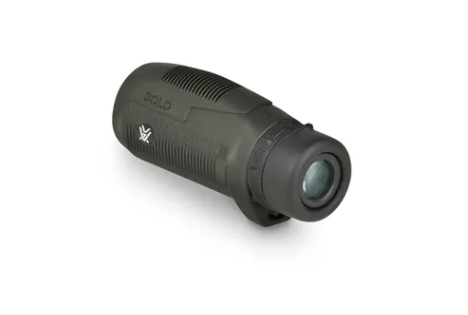
1) Vortex Solo 10×25 Monocular
Get it on Amazon
The Vortex Solo 10×25 Monocular is a compact and reliable optic that ranks highly among the best monoculars for bird watching. Its 10x magnification and 25 mm objective lens bring distant birds closer while keeping good clarity, making it a strong choice for anyone seeking the best monoculars for bird watching.
In addition, fully multi coated glass improves light transmission. As a result, views stay bright and sharp in different lighting conditions.
The monocular also features a rubber armor exterior for a secure, non slip grip. Furthermore, this design improves durability, making it easy to carry on hikes and birding trips.
It is nitrogen purged and sealed with O rings. Therefore, it performs well in rain, humidity, and cold weather without fogging.
Comfort is another strength. The adjustable eyecup supports both eyeglass and non eyeglass users. In addition, the focus wheel is easy to use, allowing quick and precise adjustments.
Clockwise turns focus on distant birds, while counter clockwise brings nearer subjects into view. Overall, the design is simple and beginner friendly, yet effective for experienced users too.
Finally, Vortex offers its VIP Warranty, which provides lifetime repair or replacement for damage or defects, excluding loss, theft, or cosmetic issues. As a result, it adds strong long term value and peace of mind when choosing the best monoculars for bird watching.
Key Specifications
• Magnification: 10x
• Objective lens diameter: 25 mm
• Fully multi coated lenses
• Waterproof, fogproof and shockproof construction
• Adjustable eyecup
Pros
• Clear and bright images due to fully multi coated lenses
• Lightweight and easy to carry during birdwatching trips
• Waterproof and fogproof performance in changing weather
• Comfortable viewing for users with or without glasses
• Durable rubber armored exterior
Cons
• Fixed 10x magnification does not allow zoom adjustments
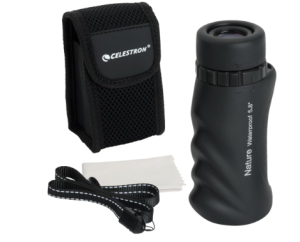
2) Celestron Nature DX 10×25 Monocular
Get it on Amazon
Key Specifications
• Magnification: 10x
• Objective lens diameter: 25 mm
• BaK 4 prism glass
• Multi coated optics
• Angular field of view: 5 point 8 degrees
• Waterproof and fogproof construction
Pros
• Bright and clear images supported by BaK 4 prisms and multi coated optics
• Lightweight design that is easy to carry during birdwatching trips
• Wide angular field of view for tracking birds in motion
• Waterproof and nitrogen purged for reliable performance in wet or humid weather
Cons
• Compact size may feel less steady for users with larger hands
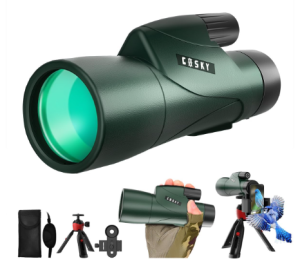
3) Gosky 12×55 HD Monocular
Get it on Amazon
The Gosky 12×55 HD Monocular is designed for birdwatchers who want stronger magnification and a brighter viewing experience while still keeping gear manageable. With 12x power and a large 55 mm objective lens, it brings distant birds into detailed view while maintaining a wide field of view of 352 feet at 1,000 yards. This makes it one of the best monoculars for bird watching for long distance viewing in open landscapes, lakesides, and forest edges.
In addition, the optical system includes an 18 mm BaK 4 prism and fully multi coated lenses. These features improve light transmission and reduce reflections, producing crisp, bright images with accurate color. Birdwatchers can clearly see plumage textures and fine details even at long range.
Comfort and usability are also well considered. The twist up eyecup provides long eye relief, allowing both eyeglass and non eyeglass users to view comfortably. Furthermore, the lightweight design and included hand strap make it easy to hold steady during long sessions in the field.
Durability is another advantage. The monocular is IPX7 rated, nitrogen filled, dustproof, and shockproof. As a result, it performs reliably in rain, mist, humidity, and dusty conditions without fogging or damage.
In addition, the included smartphone adapter allows users to capture images of birds and wildlife with ease. This adds extra value by combining observation and photography in one device. Overall, Gosky’s long experience in optics supports its reliability and makes this model one of the best monoculars for bird watching for users who want both performance and versatility.
Key Specifications
• Magnification: 12x
• Objective lens diameter: 55 mm
• BaK 4 prism
• Fully multi coated optics
• Field of view: 352 feet at 1,000 yards
• IPX7 waterproof and fogproof construction
Pros
• Strong magnification and wide field of view for long distance birdwatching
• Bright and sharp images due to BaK 4 prism and FMC lenses
• IPX7 waterproof rating and nitrogen filled construction for dependable outdoor use
• Comfortable viewing experience with long eye relief
Cons
• Larger objective lens makes it bulkier than compact 25 mm monoculars
4) Opticron BGA 8×42 Monocular
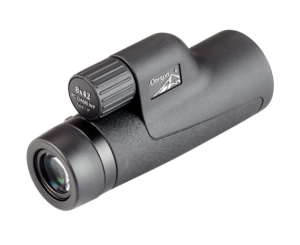
Get it on Amazon
The Gosky 12×55 HD Monocular is designed for birdwatchers who want stronger magnification and a brighter viewing experience while still keeping gear manageable. With 12x power and a large 55 mm objective lens, it brings distant birds into detailed view while maintaining a wide field of view of 352 feet at 1,000 yards. This makes it one of the best monoculars for bird watching for open landscapes, lakesides, and forest edges where long distance spotting is important.
In addition, the optical system uses an 18 mm BaK 4 prism and fully multi coated lenses. These features improve light transmission and reduce reflections, producing crisp and bright images with accurate color. Birdwatchers can clearly see fine plumage details even at longer distances, which adds to its value as one of the best monoculars for bird watching.
Comfort is also well addressed. The twist up eyecup provides long eye relief, allowing both eyeglass and non eyeglass users to view comfortably. Furthermore, the lightweight build and included hand strap make it easy to hold steady during long birdwatching sessions without fatigue.
Durability is another strong point. The monocular is IPX7 rated, nitrogen filled, dustproof, and shockproof. As a result, it performs reliably in rain, mist, humidity, and dusty environments without fogging or performance loss.
In addition, the included smartphone adapter allows users to capture images of birds and wildlife easily. This adds versatility by combining viewing and photography in one device. Overall, Gosky’s long experience in optics reinforces its reliability and makes it a practical choice among the best monoculars for bird watching.
Key Specifications
• Magnification: 8x
• Objective lens diameter: 42 mm
• ED glass objective
• Roof prism with PC phase correction
• R type high light transmission multi coatings
• Waterproof and nitrogen filled construction
• Wide angle eyepiece
Pros
• Excellent clarity and color accuracy from ED glass and advanced coatings
• Wide angle view helps track birds in motion
• Long eye relief suitable for eyeglass wearers
• Smooth focusing experience that is easy to control
• Waterproof and nitrogen filled for dependable outdoor use
Cons
• Larger objective lens makes it less pocket sized than very compact monoculars
5) Gosky Titan 12×50 monocular
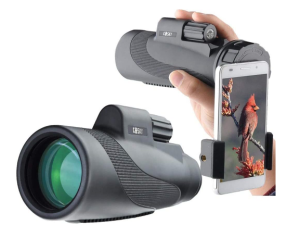
Get it from Amazon
• Magnification: 12×
• Objective lens diameter: 50 mm
• Eyepiece diameter: 18 mm
• Viewing range: 289 ft at 1000 yards
• Prism type: BAK-4
Pros
• Clear and bright images with accurate color representation
• Comfortable for glasses and non-glasses users
• Lightweight and easy to operate with one hand
• Durable rubber armor provides extra grip
Cons
• Bulkier than some compact travel monoculars
6) Nikon Monarch 7 8×30
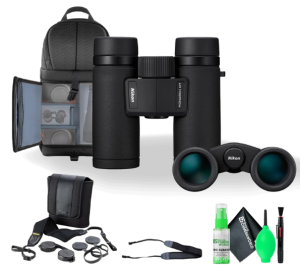
Get it on Amazon
• Magnification: 8×
• Objective lens diameter: 30 mm
• Field of view: up to 435 ft at 1000 yds
• Prism type: Roof prism with phase correction
• Lens coatings: Dielectric multilayer prism coating and multilayer lens coating
Pros
• Bright and sharp image quality with accurate color reproduction
• Very wide field of view that makes spotting and tracking birds easier
• Comfortable for eyeglass wearers due to long eye relief
• Easy to focus with smooth adjustment
Cons
• Lower magnification than some birders may prefer for extreme distance viewing
7) Leica Monovid 8×20
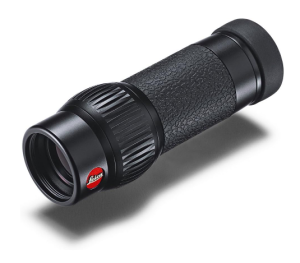
Get it on Amazon
The Leica Monovid 8×20 is designed for birdwatchers who want premium optical performance in an ultra compact form. It delivers sharp clarity and strong contrast that rival larger optics. In addition, the roof prism system with P40 phase coating and Leica’s HighLux System ensures fine detail remains visible even in strong daylight, making it one of the best monoculars for bird watching for daytime use.
Although it has a small 20 mm objective lens, it still performs well in bright outdoor conditions. As a result, it is ideal for hikers and nature enthusiasts who value both portability and image quality. Furthermore, the HDC multicoating improves brightness and resolution, while the AquaDura coating helps repel water and dirt for easier field maintenance.
The Monovid is also easy to handle in varied environments. In addition, it performs reliably in dusty trails, misty forests, and changing weather conditions. The internal focusing system allows smooth and quick adjustments when tracking moving birds, which improves overall usability.
Portability is one of its biggest advantages. Weighing only 8.5 ounces, it fits easily into a pocket yet still delivers strong 8× magnification performance. Moreover, its waterproof design adds durability for outdoor use, making it dependable in demanding field conditions.
Although it is not designed for low light birding, it works very well in daytime settings. The 15 mm eye relief supports comfortable viewing for eyeglass wearers, while the wide field of view makes scanning and spotting birds easier and more efficient.
Specifications
• Prism type: Roof prism
• Magnification: 8×
• Objective lens diameter: 20 mm
• Eye relief: 15 mm
• Field of view at 1000 yards: 341 ft
Pros
• Excellent contrast and clarity for a compact monocular
• Premium coatings that enhance brightness and protect lenses
• Extremely lightweight and pocket sized for easy carry
• Smooth and precise focusing
• Waterproof construction suitable for outdoor exploration
Cons
• Narrower field of view than mid sized models
Read also; https://opticscenta.com/best-budget-binoculars-for-birding/
Factors to consider when choosing the Best Monoculars for Bird Watching
Here are eight key factors to consider when choosing the best monoculars for birdwatching;
1. Magnification Power
Magnification determines how close distant birds will appear through the monocular. For birdwatching, moderate magnification is most practical. It provides enough reach to see details while reducing image shake.
Choosing magnification within a comfortable range allows you to follow moving birds with accuracy while still enjoying a wide, stable view. Higher magnification is helpful for distant subjects but becomes harder to keep steady unless you use a support or tripod.
2. Objective Lens Size
The size of the objective lens controls how much light enters the monocular. A larger lens produces brighter and sharper images, especially in early morning or late evening when birds are most active. Smaller lenses support a more compact and lightweight design but can reduce performance in dim environments. Selecting the right size depends on balancing portability with the need for good brightness and clarity.
3. Optical Quality
The quality of the glass and coatings directly affects image brightness, color accuracy and edge to edge sharpness. Coated lenses, quality prisms, and special glass reduce glare and distortion, giving clearer, more lifelike bird views. High optical quality also improves contrast, making it easier to identify species by subtle color patterns and fine details.
4. Field of View
Birdwatching often takes place in unpredictable outdoor conditions, so durable construction is essential. A solid housing, shock absorbing materials and waterproof or fogproof features ensure the monocular remains reliable throughout the year. Weather resistance prevents internal fogging and protects optics from rain, humidity, and dust. As a result, it ensures consistent performance in any climate or terrain.
6. Size and Weight
Portability is an important detail for anyone exploring nature on foot. A lightweight monocular is easy to carry on long hikes, and a compact design fits into pockets or small packs. However, very small models may reduce light gathering, so choose a size that balances comfort and viewing needs. A well balanced monocular will feel comfortable in the hand and remain easy to use for extended periods.
7. Eyecup Design and Eye Relief
Comfort during viewing depends greatly on eyecup quality and the amount of eye relief available. Adjustable or twist up eyecups help you achieve the correct viewing distance whether you wear glasses or not.
8. Additional Features and Accessories
Extra features like smartphone adapters, tripod compatibility, textured grips, and protective accessories further enhance the monocular’s usability. These additions make it easier to capture photos, stabilize high magnification views or keep the device protected during travel. While not essential, such details can significantly improve convenience and help you get more value from your birdwatching sessions.
Read also; 5 Best Budget Monocular for Bird Watching
Best Monoculars for Bird Watching FAQs
What magnification is best for birdwatching?
Magnification between 8x and 12x is generally the most practical for birdwatching. This range offers close views of distant birds while keeping a stable, wide field to follow movement. High magnification may seem impressive. However, it often leads to shakier images and a narrower field of view. As a result, tracking birds becomes harder without a tripod.
Does objective lens size really matter?
Yes, the diameter of the objective lens influences how much light enters the monocular and how bright the image appears. Larger lenses produce clearer images in low light conditions but also increase weight and size. Smaller lenses offer better portability, which is useful during long hikes, though they may struggle in dim light. The ideal choice depends on the balance you prefer between brightness and compactness.
Why is optical quality important for birdwatching?
High quality optics improve color accuracy, contrast and sharpness, which helps in identifying birds by subtle markings or fast movement. Coated lenses and high grade prism materials reduce glare and distortion, making the image more natural and comfortable to view. Better optics also reduce eye strain during long observation sessions.
Are weather resistant monoculars worth it?
Absolutely. Birdwatching often happens outdoors in unpredictable weather. Therefore, waterproof, fogproof, and durable designs protect the monocular from moisture, temperature changes, and bumps. This weather resistance ensures clear performance year-round and makes the device a reliable field companion.