
If you are searching for the best monocular telescope with night vision, I understand how confusing the options can feel. There are digital models, thermal units, short range devices, and long range performers.
So, in this guide, I will simplify everything for you. First, I will explain the key features that truly matter. Then, I will cover top picks for different needs and budgets. After that, I will share a practical buying guide to help you choose wisely.
Finally, I will answer common FAQs to clear up any remaining doubts. By the end, you will know exactly what to look for and which option fits your needs best.
Best Monocular Telescope with Night Vision
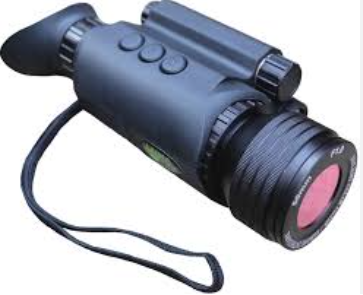
1) Luna Optics 6–36×50mm Digital G3 Day & Night Vision Monocular

The Luna Optics 6–36×50mm Digital G3 is one of the best monocular telescopes with night vision for users who want long range clarity and strong digital performance. It works well for wildlife observation, property monitoring, and outdoor exploration. Moreover, it performs reliably in both daylight and total darkness.
First, the 6x to 36x zoom range delivers detailed viewing at extended distances. You can scan wide areas at lower magnification. Then, you can zoom in for precise detail. In addition, the large 50mm all glass objective lens gathers more light. As a result, images appear brighter and clearer even in difficult lighting.
The device also records 1440p QHD video and captures 16.12MP still images. Therefore, you can document your observations with sharp results. Its advanced QHD CMOS sensor works at 0.002 lux sensitivity. Consequently, it performs impressively in very low light conditions.
For complete darkness, the built in 750mW infrared illuminator reaches up to 654 yards. This extended range supports long distance viewing without heavy image loss. Furthermore, the widescreen HD AMOLED Q display provides strong contrast and smooth visuals. You can quickly switch between full color, night vision green phosphor, white phosphor, and amber modes. Thus, the device adapts easily to changing environments.
Finally, multi coated 50mm f 1.0 optics improve clarity and light transmission. Built in Wi Fi allows real time streaming to mobile devices. Likewise, the Micro HDMI output connects directly to HDTVs for group viewing sessions. Overall, this monocular combines professional features with user friendly operation.
Specifications
- Magnification: 6x to 36x
- Objective Lens: 50mm all glass
- Aperture: f 1.0
- Sensor: QHD CMOS
- Video Resolution: 1440p QHD
- Photo Resolution: 16.12MP
- Light Sensitivity: 0.002 lux
Pros
- Wide 6x to 36x zoom range
- Bright 50mm lens for better low light clarity
- High resolution 1440p video recording
- Long 654 yard infrared range
- Multiple viewing modes for flexibility
- Wi Fi streaming to mobile devices
- HDMI output for large screen viewing
Cons
- Digital zoom at higher levels may reduce image sharpness
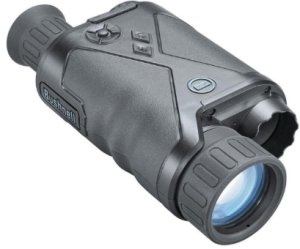
2) Bushnell Equinox Z2 Night Vision Monocular
Get it on Amazon
The Bushnell Equinox Z2 Night Vision Monocular is one of the best monocular telescopes with night vision for beginners and outdoor users. It offers simple controls, solid clarity, and reliable digital performance. Moreover, it works effectively during the day and in complete darkness.
First, the 3x optical magnification paired with a 30mm objective lens provides a clear and stable image. It is especially useful for viewing objects within 50 yards where a wider field of view is preferred. However, it can detect targets more than 500 feet away. In fact, under ideal conditions it can reach beyond 1,000 feet using the built in infrared illuminator.
In addition, the powerful IR illuminator improves visibility in total darkness. You can also adjust IR brightness to prevent close objects from appearing washed out. Therefore, image quality remains balanced at different distances. Fine focus adjustment allows you to rotate the objective lens for optimal sharpness depending on how far the subject is.
Another strong advantage is connectivity. You can stream live video directly to your mobile device. Then, you can control zoom, video recording, image capture, and IR brightness from your phone. This makes operation more convenient and flexible in the field.
Furthermore, the Equinox Z2 captures high quality 1080p video both day and night. Since digital night vision is less sensitive to sudden light exposure, you can keep the cap on when switching between day and night modes. Overall, this monocular offers practical features, good range, and user friendly controls at a reasonable price.
Specifications
- Optical Magnification: 3x
- Digital Zoom: Up to 3x
- Objective Lens: 30mm
- Detection Range: More than 500 feet, up to 1,000 feet in ideal conditions
- Video Resolution: 1080p Full HD
- Infrared Illuminator: Built in and adjustable
- Focus System: Manual objective lens rotation
Pros
- Clear 3x optical magnification with wide field of view
- Adjustable infrared for better close range balance
- Live video streaming to mobile devices
- Remote control of zoom and recording through phone
- Records 1080p video day and night
- Simple focus adjustment for sharp images
Cons
- Digital zoom reduces clarity at higher levels
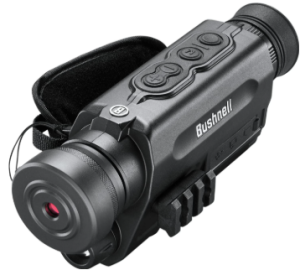
3) Bushnell Equinox X650 Digital Night Vision Monocular
Get it on Amazon
The Bushnell Equinox X650 Digital Night Vision Monocular is one of the best monocular telescopes with night vision for outdoor use. It offers dependable day and night performance in a compact handheld design. Moreover, it suits hunters, campers, and wildlife observers who need clear viewing in changing light conditions.
First, the device allows seamless switching between daytime color viewing and nighttime infrared imaging. Therefore, you can use it throughout the day without changing equipment. The 5x zoom lens provides detailed viewing at moderate distances. As a result, subjects appear closer and easier to identify.
In complete darkness, the built in infrared illuminator delivers visibility up to 650 feet. This ensures reliable performance even when no natural light is available. In addition, the IR system maintains consistent brightness for improved clarity at night.
The Equinox X650 also supports video recording directly to a micro SD card, sold separately. Thus, you can capture hunts, scouting sessions, or wildlife activity in high quality. Furthermore, the included tripod mount adaptor improves stability during extended observation. This makes it a practical alternative to bulkier night vision goggles.
Bushnell has built optics and outdoor technology for over 70 years. Consequently, the X650 reflects durable construction and user focused design. Overall, it provides a balanced mix of range, recording capability, and portability at a competitive level.
Specifications
- Optical Magnification: 5x
- Viewing Modes: Daytime color and nighttime infrared
- Infrared Range: Up to 650 feet
- Video Recording: Yes, via micro SD card
- Infrared Illuminator: Built in
- Mounting Option: Tripod mount adaptor included
- Design: Handheld digital monocular
Pros
- Easy switch between day and night modes
- Clear 5x zoom for detailed viewing
- Infrared range up to 650 feet
- Video recording capability
- Compact and lightweight design
- Tripod compatibility for stable viewing
- Trusted brand reputation
Cons
- Micro SD card sold separately
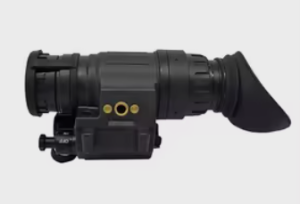
4) AGM PVS-14 Gen 3 Night Vision Monocular
Get it on Amazon
The AGM PVS 14 Gen 3 Night Vision Monocular is widely regarded as one of the best monocular telescopes with night vision for professional use. Originally commissioned by the United States Military, it has proven reliable in demanding environments worldwide. Moreover, it offers rugged construction with advanced night vision capability.
First, this device is designed for multi purpose nighttime operations. It can be used as a handheld monocular. In addition, it can be head mounted or helmet mounted for hands free operation. This flexibility makes it ideal for hunting, tactical use, research, and outdoor exploration.
The Gen 3 image intensifier tube delivers excellent low light performance. Manual gain control allows users to adjust brightness for different environments. Furthermore, the automatic bright light shut off feature protects the photocathode tube from damage. As a result, long term durability improves significantly.
The built in infrared illuminator and flood lens enhance visibility in very low light conditions. The unit offers 1x magnification for natural depth perception. Optional 3x and 5x lenses are available for extended viewing distance. With a 26 mm F 1.2 lens system and a 40 degree field of view, images appear sharp and well defined.
In terms of durability, the PVS 14 conforms to 810G Military standards. It is waterproof, compact, and weighs less than 12.4 ounces. LED indicators inside the field of view display low battery, IR activation, and excessive light warnings. Therefore, users stay informed without shifting focus.
Overall, this monocular combines military grade performance, strong image clarity, and versatile mounting options. It is built for serious users who demand dependable night vision in extreme conditions.
Specifications
- Image Tube: Gen 3 image intensifier
- Magnification: 1x standard, optional 3x and 5x lenses
- Lens System: 26 mm F 1.2
- Field of View: 40 degrees
- Focus Range: 0.25 m to infinity
- Diopter Adjustment: -6 to +4
- Infrared Illuminator: Built in with flood lens
Pros
- Military grade durability
- Excellent Gen 3 low light performance
- Manual gain control for brightness adjustment
- Automatic bright light protection
- Multiple mounting options for hands free use
- Lightweight and compact design
- Wide 40 degree field of view
Cons
- Premium price point
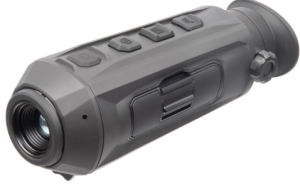
5) AGM Taipan TM15-384
Get it on Amazon
The AGM Taipan TM15 384 is one of the best monocular telescopes with night vision for serious outdoor users. Unlike traditional night vision, it uses thermal imaging to detect heat signatures. Therefore, it works in total darkness, smoke, dust, and light camouflage.
First, the 384×288 thermal sensor combined with a 12μm detector delivers sharp heat detection. It can identify a six foot target at distances up to 710 meters. As a result, hunters and outdoor observers gain strong long range awareness. The 1280×960 display ensures clear image presentation with good detail.
Moreover, adaptive image processing technology improves overall clarity. Advanced AGC, DDE, and 3D DNR processing refine thermal contrast. Consequently, heat signatures appear more defined even in challenging environments.
The device also includes 8x to 12x digital zoom for closer inspection. This allows users to zoom in on distant heat sources for better identification. In addition, built in Wi Fi hotspot and app connectivity enable real time sharing and remote parameter adjustment. The internal 16GB storage supports image and video recording for later review.
Durability is another advantage. The IP67 rated housing protects against dust and water. Despite its rugged build, the monocular remains lightweight and comfortable to carry. Battery life reaches up to 7.5 hours of continuous use, which supports long sessions in the field.
Overall, the Taipan TM15 384 offers reliable thermal performance, modern connectivity, and solid build quality. It is well suited for hunting, scouting, and professional outdoor operations. This is why it is a strong contender for the best monocular telescope with night vision.
Specifications
- Sensor Resolution: 384×288 thermal sensor
- Detector Pitch: 12μm
- Detection Range: Up to 710 meters for six foot target
- Display Resolution: 1280×960
- Digital Zoom: 8x to 12x
- Storage: 16GB internal
- Connectivity: Built in Wi Fi hotspot with app support
Pros
- Long 710 meter heat detection range
- Clear 384×288 thermal imaging sensor
- Advanced image processing improves clarity
- Built in Wi Fi with app control
- 16GB storage for recording images and video
- Durable IP67 rated construction
- Long battery life for extended field use
Cons
- Digital zoom reduces detail at maximum levels
Read also: 5 Best budget digital night vision monocular
Factors to Consider when Choosing the Best Monocular Telescope with Night Vision.
Here are 8 well explained factors to consider when looking for the best monocular telescope with night vision;
1) Type of Night Vision Technology
First, understand the technology used. Devices may use digital night vision, image intensifier tubes, or thermal imaging. Digital models are affordable and easy to use. Image intensifiers perform better in natural low light. Thermal units detect heat and work in total darkness, smoke, or fog. Therefore, choose based on your environment and purpose.
2) Magnification Power
Next, check the magnification level. Lower magnification provides a wider field of view. Higher magnification allows closer detail at long distances. However, too much zoom can reduce image stability and clarity. So, balance magnification with your typical viewing distance.
3) Objective Lens Size
The lens size affects brightness. Larger objective lenses gather more light. As a result, images appear clearer in low light conditions. Smaller lenses are lighter and more compact. Therefore, consider whether brightness or portability matters more to you.
4) Detection Range
Detection range is critical for night use. Some devices work well within short distances. Others detect subjects hundreds of meters away. If you plan to observe wildlife or monitor large areas, longer range is important. Otherwise, mid range performance may be sufficient.
5) Infrared Illuminator Strength
In complete darkness, infrared support becomes essential. A stronger infrared illuminator increases visibility range. Additionally, adjustable brightness helps prevent image washout at close distances. Therefore, look for models with controllable infrared settings for better flexibility.
6) Image and Video Recording Capability
Many modern monoculars allow photo and video recording. This feature is useful for hunting, research, or security documentation. Higher resolution provides clearer playback. In addition, built in storage or memory card support adds convenience.
7) Durability and Weather Resistance
Outdoor use requires rugged construction. Waterproof and dust resistant ratings improve reliability in harsh conditions. Lightweight materials also enhance comfort during long sessions. Therefore, durability should match your intended environment.
8) Battery Life and Power Management
Finally, consider battery performance. Night vision and infrared functions consume more power. Longer battery life supports extended field use. Some models also include power saving features. Thus, reliable battery capacity prevents interruptions during critical moments.
Best Monocular Telescope with Night Vision FAQs
What is the difference between digital night vision and thermal imaging?
First, digital night vision uses infrared light to brighten dark areas. It works well at night and can also function during the day. However, it depends on some light or IR support. In contrast, thermal imaging detects heat signatures. Therefore, it works in total darkness, smoke, and light fog. It does not show detailed natural features, but it clearly highlights living targets.
How far can a night vision monocular see?
It depends on the model and technology. Entry level digital devices may detect objects a few hundred feet away. More advanced units can reach several hundred meters. Thermal models often detect heat at even longer distances. However, detection range is different from clear identification distance. So, always check both specifications.
Is higher magnification always better?
Not always. Higher magnification shows more detail at long distances. However, it reduces field of view and may lower image stability. Therefore, moderate magnification often works best for general outdoor use. Choose based on how far you plan to observe.
How long does the battery usually last?
Battery life varies by device and usage. Infrared and video recording consume more power. Some models last only a few hours. Others run over seven hours on a full charge. So, consider battery capacity if you plan long nighttime sessions. Carrying spare batteries is also a smart option.
Conclusion
In conclusion, the best monocular telescope with night vision combines clear imaging, reliable range, strong infrared support, and durable construction. Some models focus on digital clarity and recording features. Others deliver advanced thermal or professional grade performance. Therefore, the right choice depends on your needs and budget.
However, all the options discussed offer proven low light capability and practical field use. By focusing on technology type, magnification, range, battery life, and durability, you can choose with confidence. In the end, the best device is the one that matches your environment and viewing goals while delivering consistent performance when it matters most.